


Share This Article
What do Hungarian wines bring to mind for you? I can guess: Tokaj! This unique wine region, listed as a UNESCO World Heritage Site, is eagerly visited by Polish tourists. Today, I invite you to the Szedmák winery, where you can learn everything about Tokaj wines, taste exceptional vintages, and get answers to all your questions about winemaking!
I had heard about the Szedmák winery for a long time and had been planning to visit it for quite a while. We finally managed to do so during our holiday trip, and I already know that on our next visit to the area, we will definitely return!
This text is not intended to promote alcohol, but rather enotourism and the passion of the owners the Szedmák family.
Location and Access
The Szedmák Borház winery is located in the village of Tarcal, in the Tokaj wine region in Hungary. The town is 372 kilometers from Kielce (just under 6 hours by car), making it a perfect destination for a long weekend.
If you don’t want to buy Slovak and Hungarian road vignettes, navigation systems will easily guide you along toll-free routes. We chose this option ourselves and did not notice any significant loss of time or poor road quality.
If you are driving from Miskolc, an interesting attraction awaits you along the way. A musical road was recently created there. Using special paint, lines were drawn on the surface that play a melody when you maintain a constant speed. This musical section is located only on the Miskolc → Tokaj route, and you will find information about it on large roadside signs with musical notes.
Szedmák Borház – About the Winery
The owners of the winery, Sándor and Brigi, are first-generation winemakers, but they already have considerable experience in the field. Their current two vineyards were not their first encounter with wine production. One of the vineyards was purchased with grapevines already growing, while the second was planted entirely from scratch. From the moment it was established, they waited five years for the first grapes that would later become Tokaj wine.
Today, their vineyards cover nearly 4 hectares and are located on the slopes of Sajgó and Deák hills. Traditional Tokaj grape varieties are cultivated there: Furmint, Hárslevelű, Yellow Muscat, Zéta, Kabar, and Kövérszőlő.
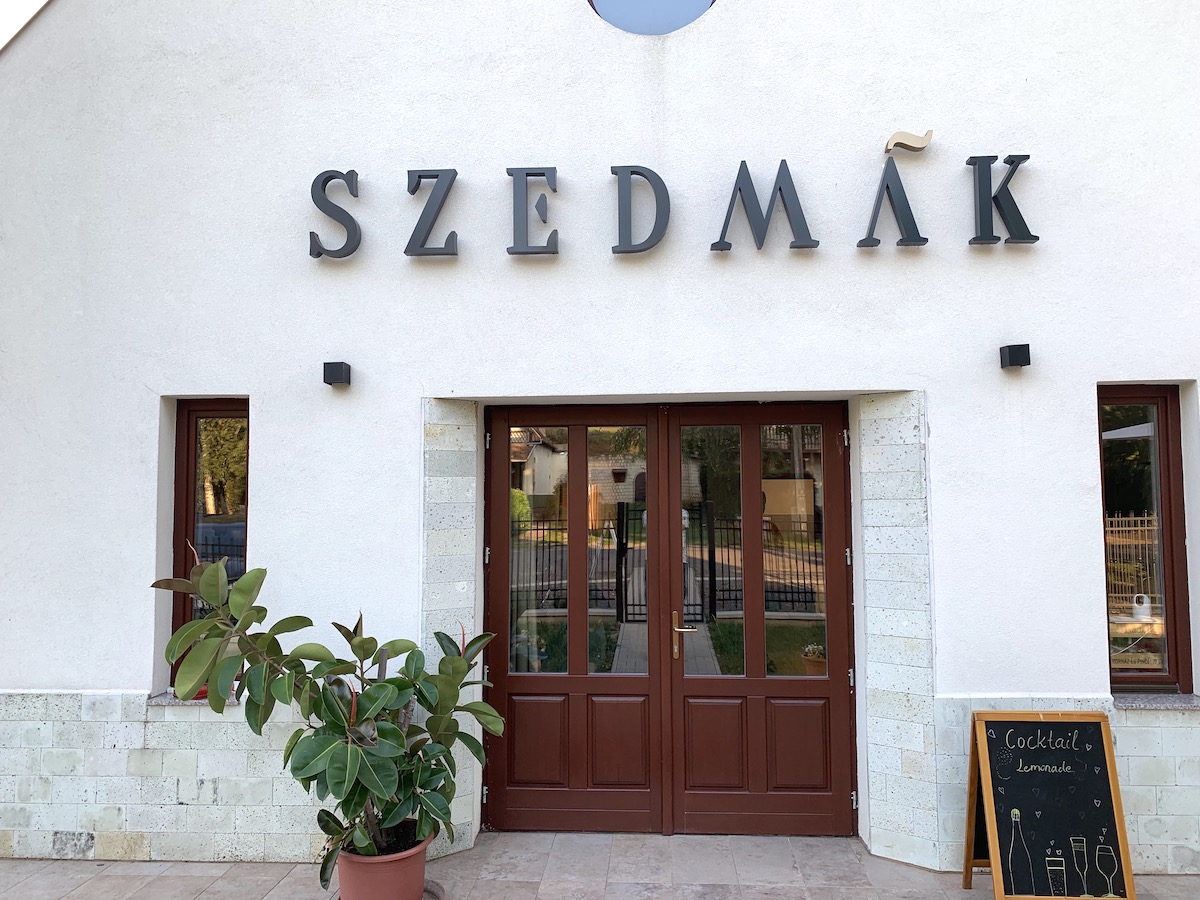
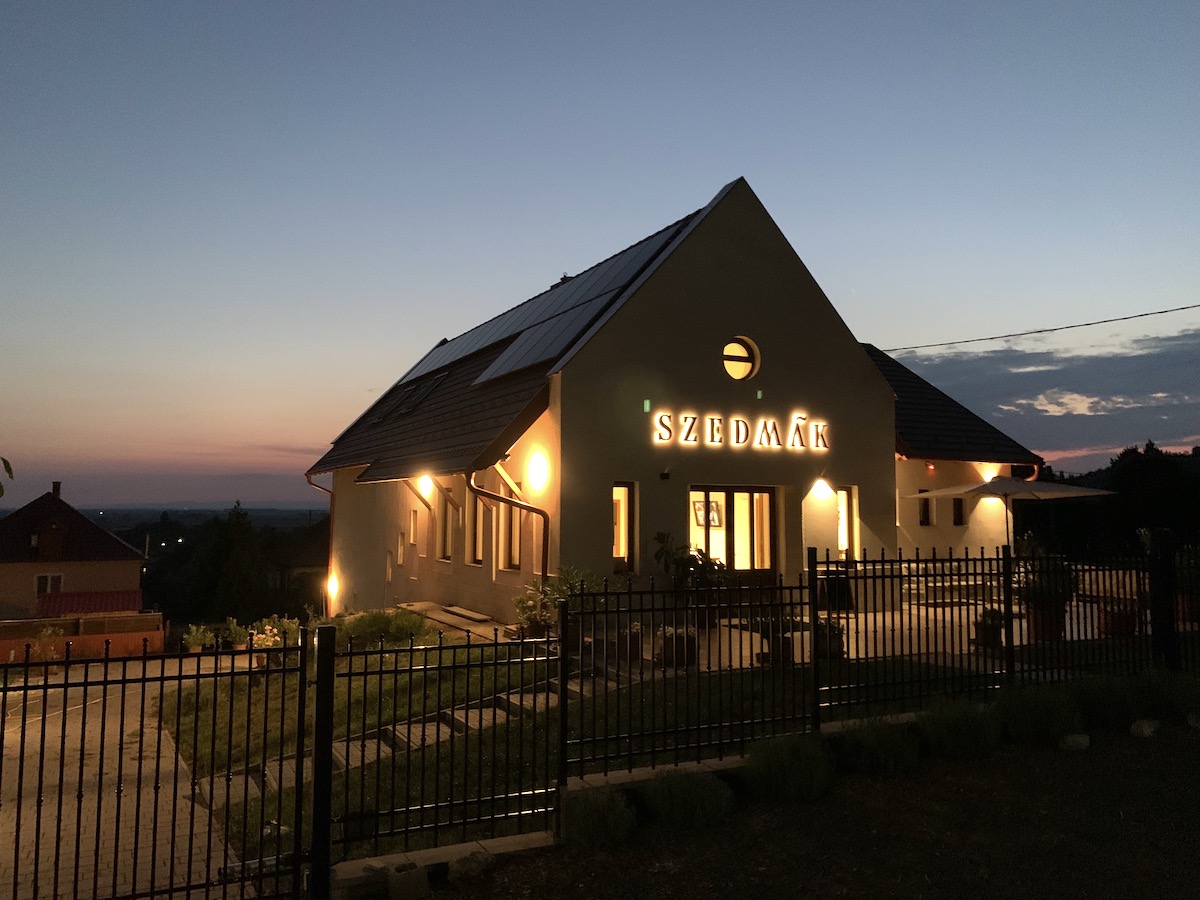
The Szedmák Wine House, which you can visit today, is a relatively new project that allows the owners to introduce guests to the secrets of Tokaj wine. The new building consists of a spacious tasting room with tables and a television displaying photos of the vineyards throughout the seasons, as well as a wine shop. For tastings, the owners also provide a small kitchen and restrooms. Previously, tastings were held in an old house across the street.
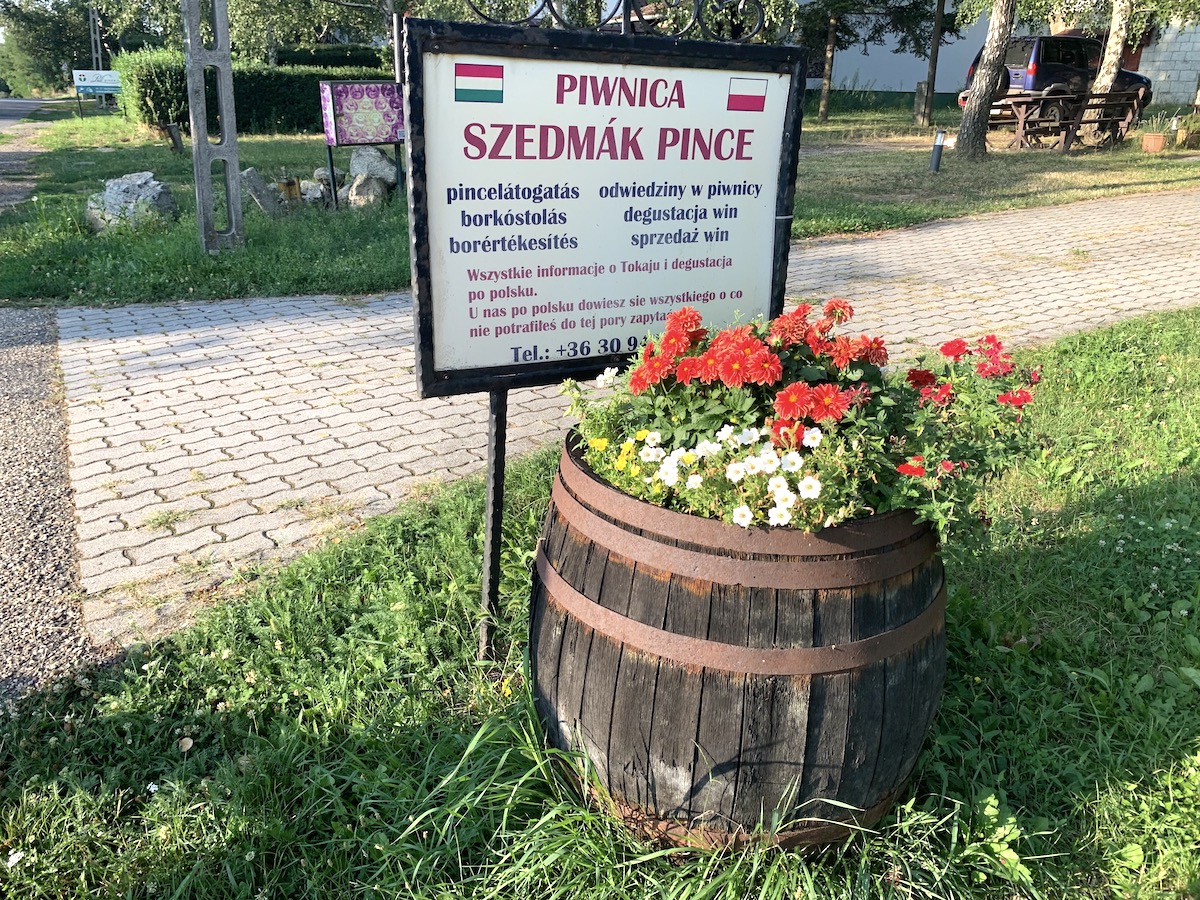
As you may have noticed at the very beginning of the text and in some of the photos, the Polish language appears quite often. Before learning the winery’s history, we thought the owners might have Polish ancestors or family connections, hence the language choice. The truth turned out to be different – and very interesting. Over the years, Sándor worked in various countries, and one of the markets he cooperated with was Poland. He decided to learn Polish to make his work easier. Today, he speaks Polish very well and is happy to answer any questions, describing in detail the life of a winemaker, the challenges he faces, and the charms of Tokaj wine.

The Tokaj Wine Region
The Tokaj wine region is listed as a UNESCO World Heritage Site. It is a historic land and one of only three regions in the world where natural sweet wines are produced. Although Tokaj wine is often associated with very sweet styles, you can also find excellent dry, semi-dry, and even sparkling wines made from traditional grape varieties.
In the Tokaj region, six grape varieties are traditionally cultivated: Furmint, Hárslevelű, Yellow Muscat, Zéta, Kabar, and Zengő. All of them are white varieties. It is also worth mentioning that the Tokaj wine region is not located exclusively in Hungary — part of it lies in Slovakia, where wine production is also developing dynamically.
The Tokaj wine region was officially established in 1737, but the history of grape cultivation here dates back over 1,000 years.
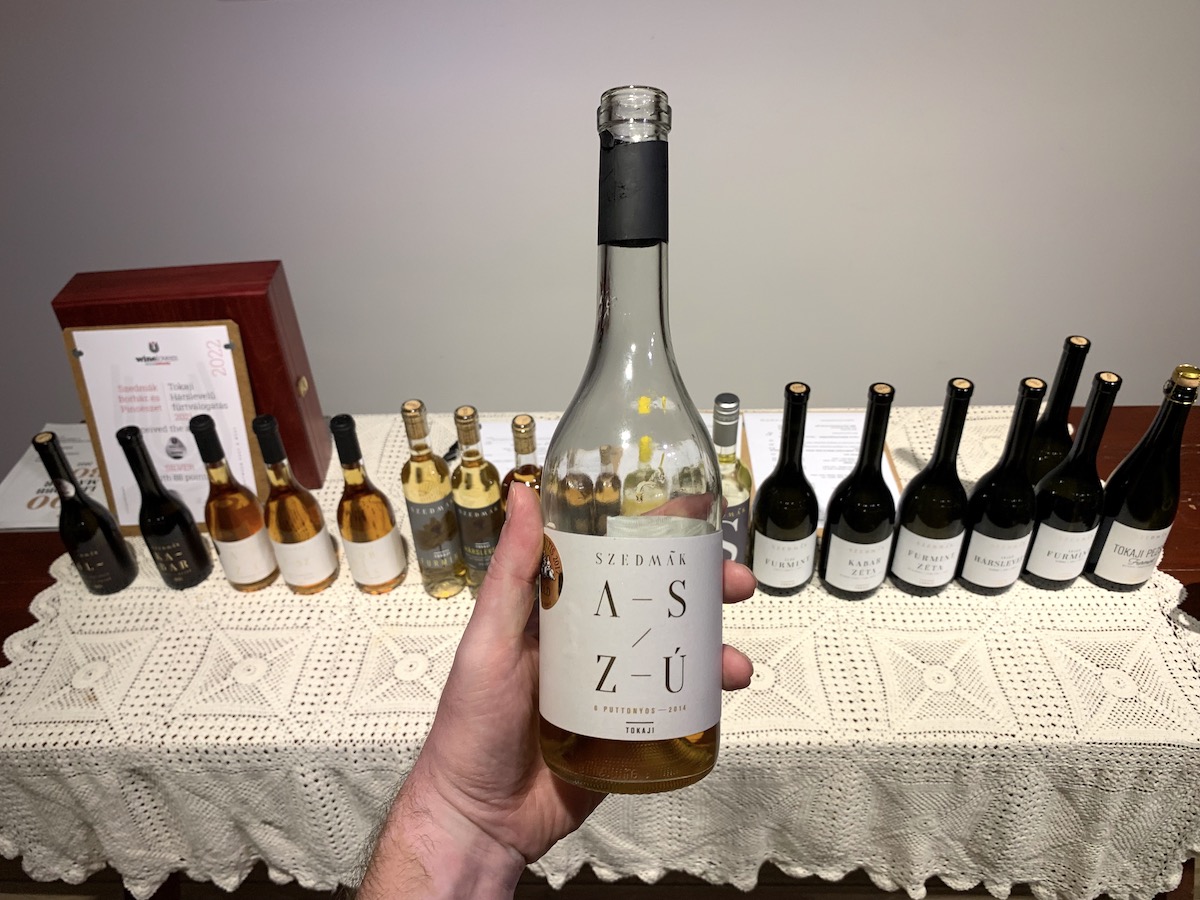
The most valuable wine from the region is Tokaj Aszú. It is made from grapes affected by “noble rot,” which causes them to dehydrate and increases their sugar content. The wine itself is produced from regular grapes, while the dried Aszú berries are added in so-called puttonyos — wooden containers whose contents are mixed with fresh must. On Tokaj Aszú labels, you will find information indicating that 3 to 6 puttonyos were added. This directly affects the sweetness, color, and price of the wine. At the Szedmák winery, Aszú grapes are harvested by hand, and one person collects about 10 kilograms of fruit per day. One puttonyos looks like this:

Wines Produced
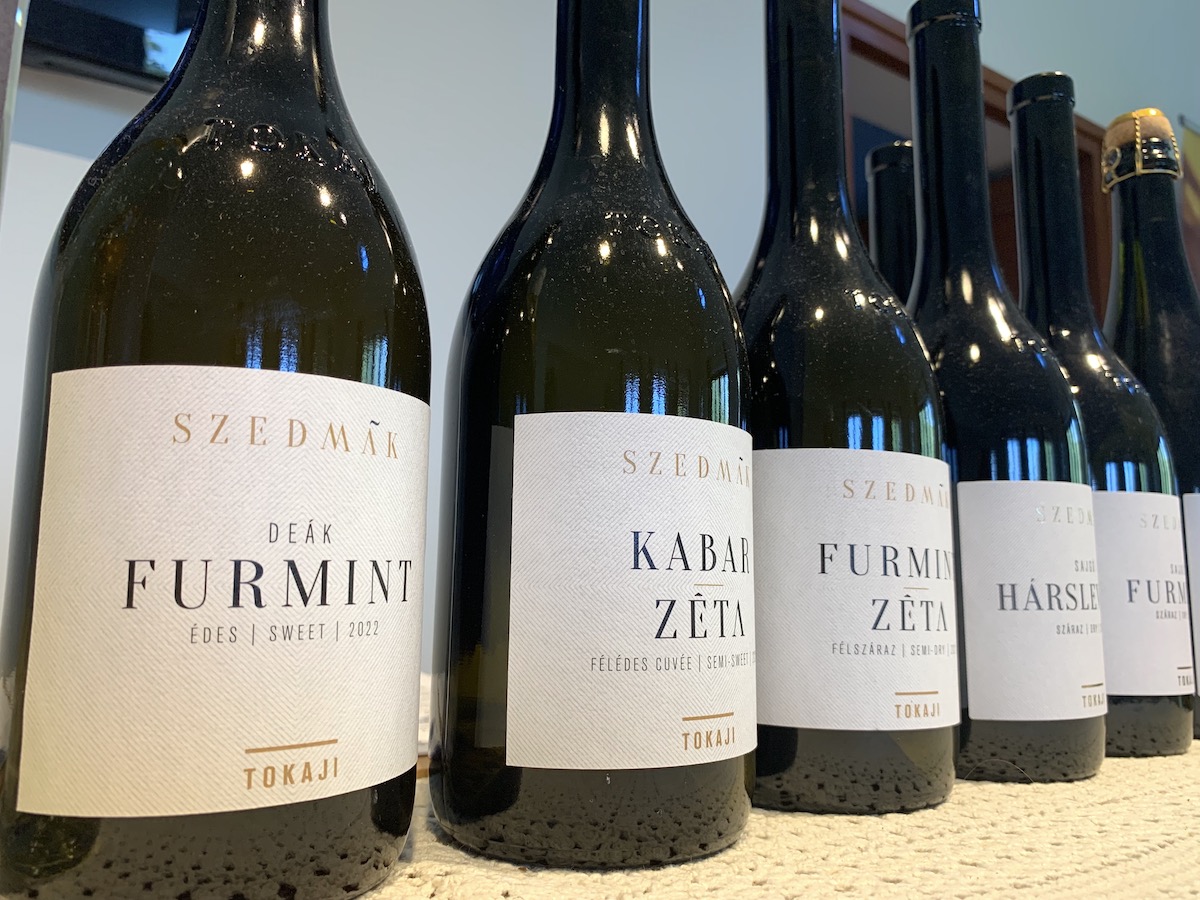
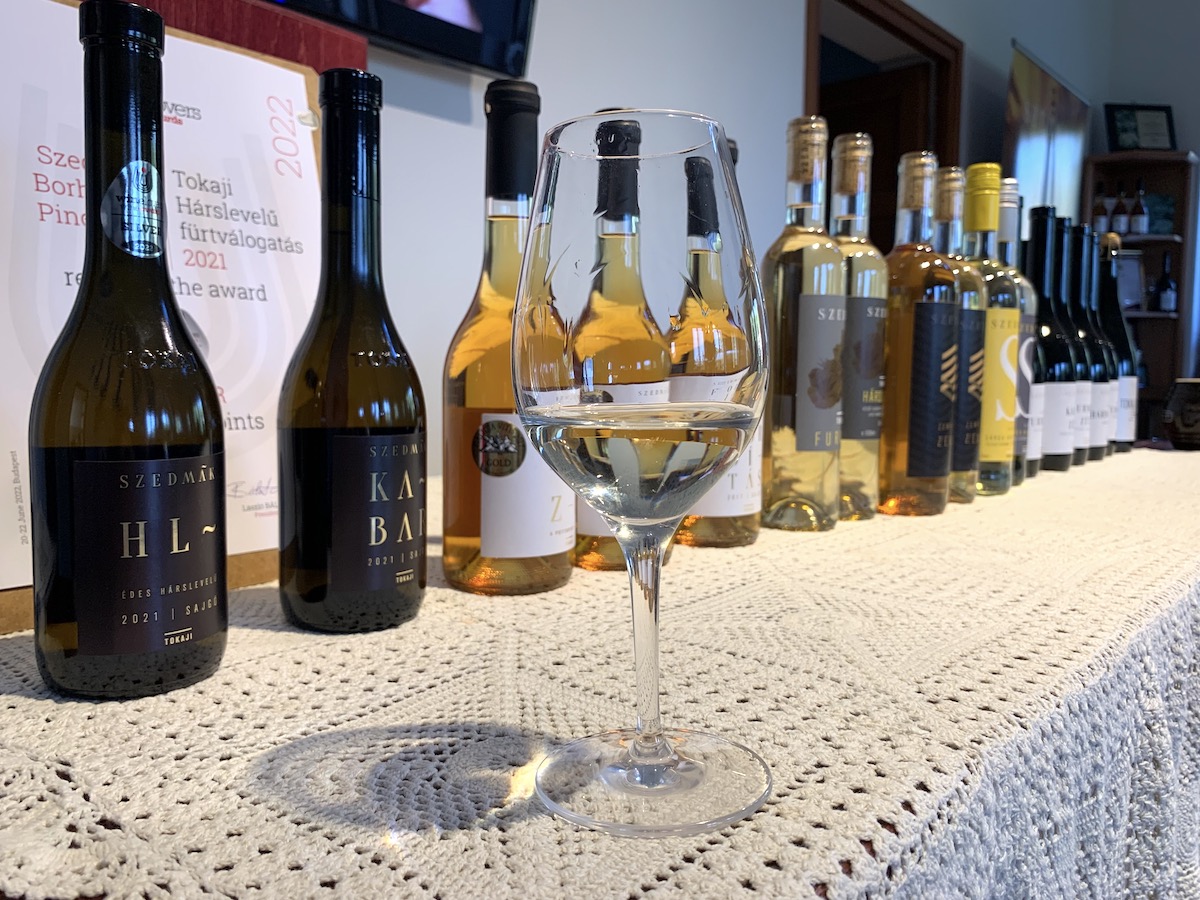
Before the tasting at the Szedmák Wine House, Sándor always asks guests what kinds of wines they prefer. In the Szedmák cellars, both lovers of sweet notes and fans of dry flavors will find something for themselves.
Our tasting began with a sparkling Furmint, which was the perfect introduction to the Szedmák wines. Later, we had the opportunity to taste dry and semi-dry wines made from Furmint and from the second most popular grape variety in the region — Hárslevelű. Each successive wine offered plenty of freshness and remarkable aromas.
From dry and semi-dry wines, we moved on to semi-sweet and sweet styles. The Yellow Muscat we tasted captivated me completely. I have long loved the floral notes of Muscat, and this one was particularly pleasant. We also had the chance to taste Tokaj Szamorodni — interestingly, its name comes from the Polish language, as grape juice fermented during transport by Polish merchants.
At the end of the tasting, we tried a 6-puttonyos Tokaj Aszú from 2014. Despite its pronounced sweetness, the range of aromas on the nose and flavors on the palate was enormous. This is not a wine you drink in large quantities due to its sweetness, but I became a huge fan of it. It contained as much as 162 g of residual sugar, yet the sweetness came through as beautifully ripe fruit.
Tokaj Aszú wines are the most famous and most prestigious wines of the region. They are also the most expensive — in supermarkets, prices start at around 80 PLN, while at wineries they range from about 100–200 PLN or more, depending on the number of puttonyos and the vintage. You can buy wines on site, and card payments are accepted in the shop. We stocked up generously on both semi-dry wines and Tokaj sweetness!


Winery Offer
The Szedmák Wine House offers much more than just purchasing excellent bottled wines. On site, you can choose a basic tasting option including 5 classic Tokaj wines or an extended option featuring 7 wines. The prices are 5,000 and 7,000 forints respectively. You can also order local cheeses, cured meats, and bread to accompany the tasting, although it is best to arrange this in advance.
The owners are happy to take you on a tour of one of their two vineyards or organize a sunset walk combined with a tasting. We had the opportunity to see two sunsets in Tarcal, and we can tell you — they were beautiful!
You can also come for a tasting with children — the owners will take care of a special “wine” for them as well. Delicious local grape juice will certainly be a hit! You can find the full offer of the Wine House at szedmak.pl.
Tarcal – What to See On Site and Nearby
Tarcal is a small village in the Tokaj wine region. There are several dozen wineries here, and the village itself stretches along the road leading to the town of Tokaj. Above Tarcal rises a statue of Jesus, from which an incredible view of the surrounding area unfolds. The road up to the statue climbs steeply, but along the way you may encounter blooming or fruit-bearing almond trees, fragrant patches of lavender and rosemary, and various fruit trees. Behind the statue, a view awaits you of a flooded quarry where, in good weather, the water takes on an astonishing blue color.
Tarcal is also home to a former Jewish synagogue, although it is not open to visitors. However, you can visit two churches located next to each other.


Is It Worth Visiting?
Absolutely. The Szedmák Wine House is a place full of passion and openness. Sándor and Brigi make you feel right at home. Excellent wines — each with an interesting story — combined with engaging conversations create a place where time seems to flow differently. An additional advantage for Polish tourists is Sándor’s knowledge of Polish, which allows you to learn everything in detail without any language barrier.
The entire Tokaj wine region, the village of Tarcal, and the Szedmák winery are well worth your attention. If you are looking for an interesting trip full of remarkable landscapes, great wine, and fascinating places, this is definitely the direction to choose!