


Share This Article
Čičmany is a small village located in Slovakia. It is home to just over 100 residents, yet it has something special that makes tourists from all over the country and from abroad visit it regularly. The reason lies in the local traditions that are still carefully preserved, including the distinctive practice of decorating houses with painted patterns—but that’s not all! You’ll learn more about it in this article, and of course also during your visit to the village itself.
If at this point you already feel intrigued and would like to share your travel plans with a companion but aren’t sure how to pronounce the name of this unusual village, here’s a hint: the easiest way is to say “Chich-many” 🙂
My visit took place in autumn, but Čičmany is also a ski resort, offering interesting downhill slopes that await winter sports enthusiasts as well.
Location and access
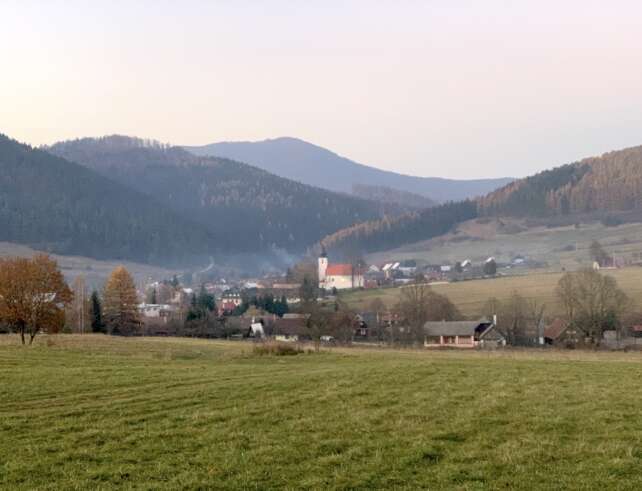
Čičmany is situated in the Žilina Region (the Slovak equivalent of a Polish voivodeship), in the Žilina District. It is one of the tourist attractions of the spa region known as Rajecká Dolina. The village lies about 40 kilometers from Žilina and just under 100 kilometers from the Polish border crossing at Zwardoń.
Čičmany is not a large village, and if you arrive by car you will find plenty of parking spaces. It is best to park in the lot located at Čičmany 146, right next to the Radenov dom Museum.
It is also worth noting that Čičmany is the highest-lying village in the region, and the sources of the Rajčianka River are located nearby.
Čičmany and its history
Let me start by saying that many people refer to the village of Čičmany as an open-air museum, but that is not entirely accurate. Čičmany is a real, living village, although it holds the status of a Folk Architecture Reserve. The first written records of the village date back to 1272. Its inhabitants were initially engaged in agriculture, sheep farming, shoemaking, and the production of bryndza cheese.
Over the centuries, the village changed hands several times, and due to the harsh living conditions, its residents often left Čičmany in search of work. The village was also repeatedly affected by fires, which destroyed its unique buildings. In 1977, Čičmany was officially declared a folk architecture reserve, encompassing as many as 115 houses, 36 of which are listed as National Cultural Monuments.
Painted houses
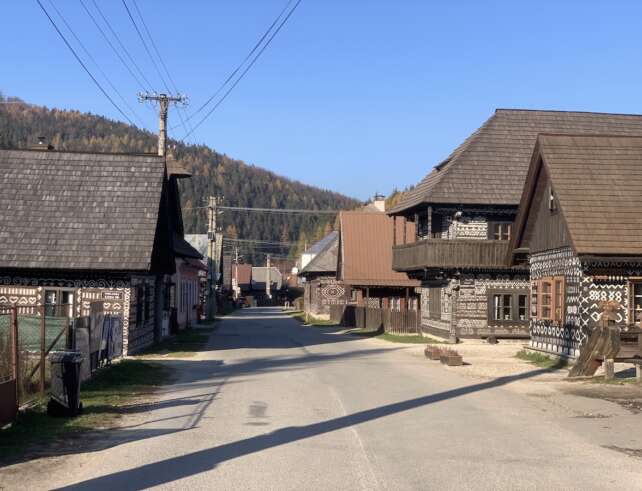
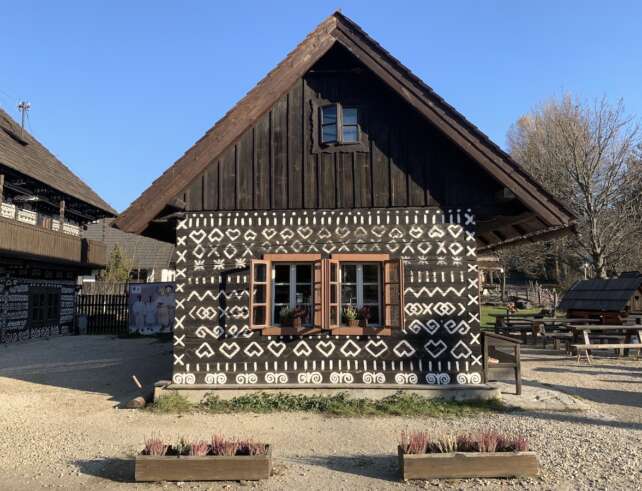
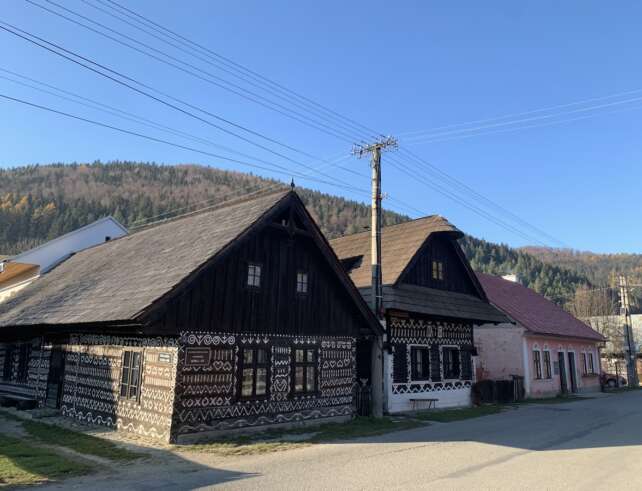
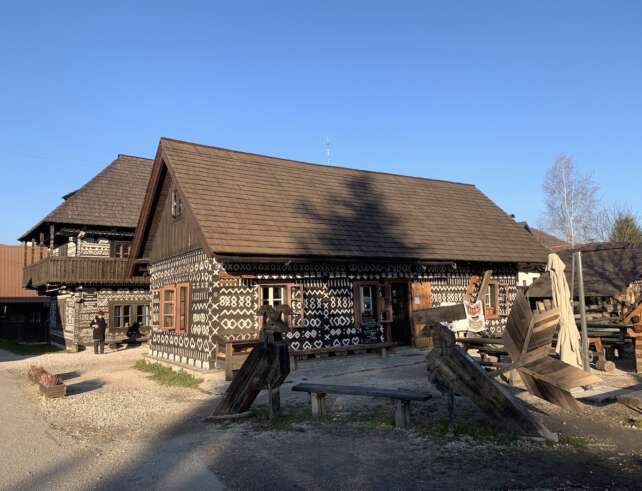
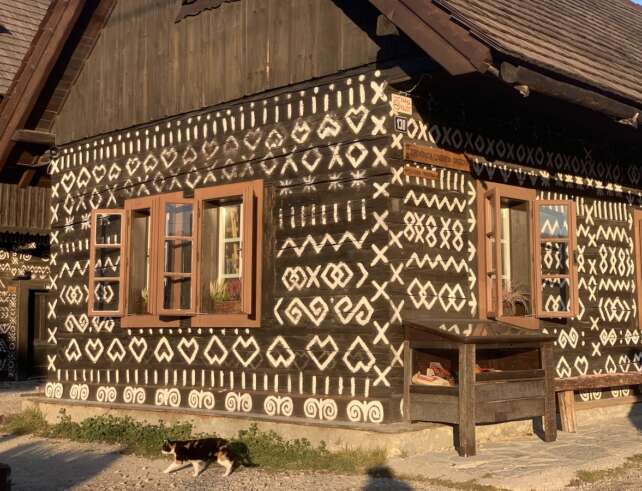
The houses in Čičmany have been painted for around 200 years. Initially, the designs were simpler and made using lime. The first decorations were intended to protect the corners of the houses and the parts closest to the ground; over time, the patterns began to appear more widely across the buildings. The designs seen today took their present form after a fire in 1921. Nowadays, the decorations are often created using modern materials rather than lime—most commonly regular paints—but the idea of decorating the houses remains very much alive.
The patterns painted on the houses have their own names and symbolism. Among them you will find arrows, hearts, crosses, and animals.
While visiting, you can buy a variety of souvenirs beautifully decorated with traditional house motifs. Of course, there are magnets, but also socks, hats, and many other types of souvenirs. The distinctive Čičmany pattern has even appeared on the uniforms of the Slovak Olympic team!
Regional Museum – Radenov House and House No. 42
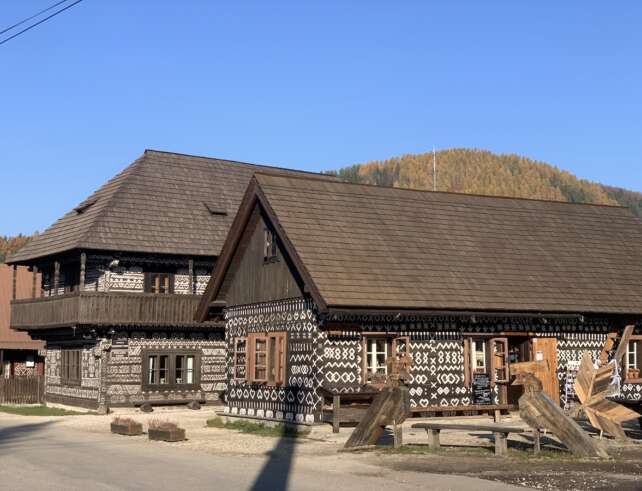
Right next to the parking area mentioned earlier, you will find two museum buildings that are well worth a visit. The first one is Radenov House. The exhibition has been open since 1967 and is dedicated to local customs and the various events that accompanied everyday life, such as marriage, death, and birth. You can also learn a lot about the traditions that were practiced in Čičmany in the past and those that are still alive today.
A separate section of the exhibition is devoted to traditional clothing. In one of the rooms, you can see traditional men’s and women’s outfits, as well as what truly distinguishes Čičmany – its unique local embroidery. An interesting element of folk costume were also women’s caps; the exhibition explains in detail the steps women had to follow to properly arrange their hairstyles. A separate, though small, part of the display focuses on the local production of slippers and shoes. At first, they were made in households, later in small workshops whose products were even exported to the Soviet Union. Today, only one craftsman still produces such footwear—and it’s a pity, because in my opinion some of the designs would certainly appeal to modern women.
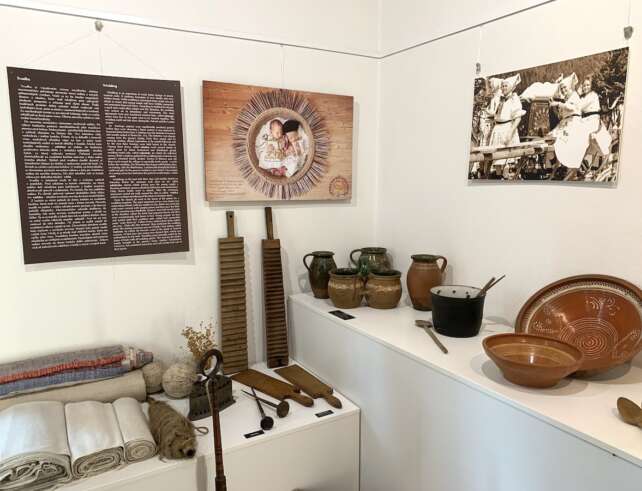
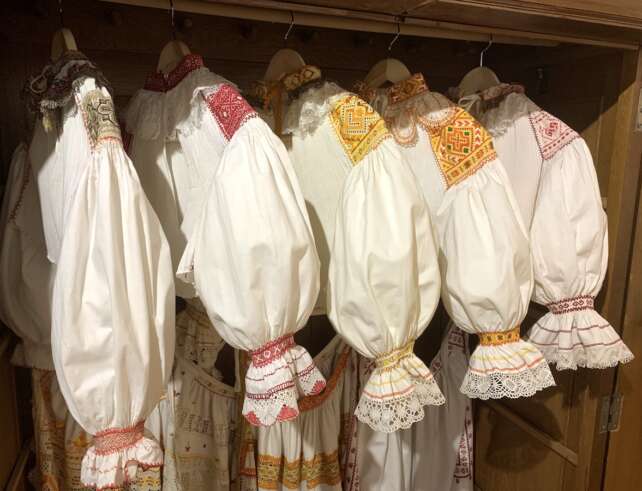
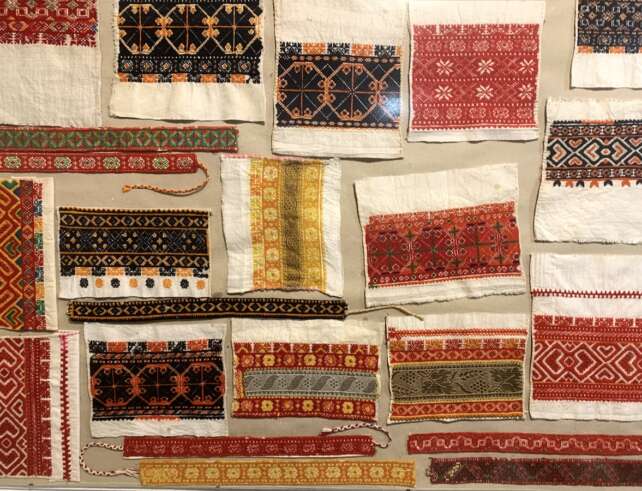

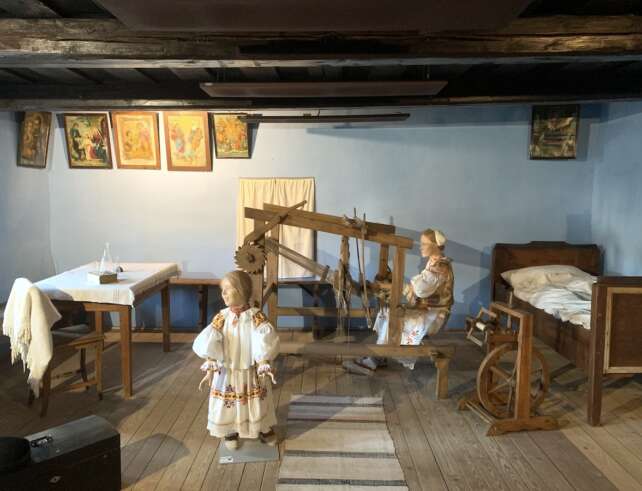
In 1986, the museum also purchased House No. 42, located almost directly opposite the previously described building. It once belonged to four families: Jozef Gregor, Ján Chúpek, and the brothers Juraj and Peter Pupák. The house was built in 1913 on the site of a former mill. It was inhabited until 1980, and today it houses an exhibition presenting life in the village of Čičmany at the turn of the 19th and 20th centuries.
Admission to the museums costs €5 for adults and €2.50 for children and seniors. The museums are open from Tuesday to Friday, 9:00–12:00 and 12:30–15:00, and on Saturdays and Sundays, 8:00–12:00 and 12:30–16:00. The museum is closed on Mondays.
Before your visit, be sure to check the current opening hours and ticket prices on the museum’s website.
Museum – Painted on Wood (Na dreve maľované)
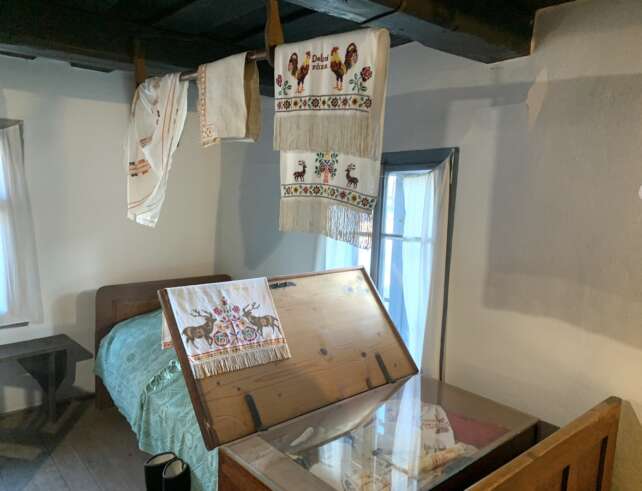
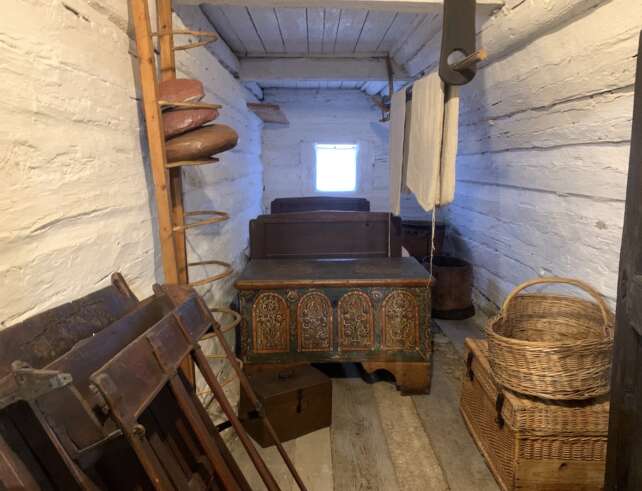
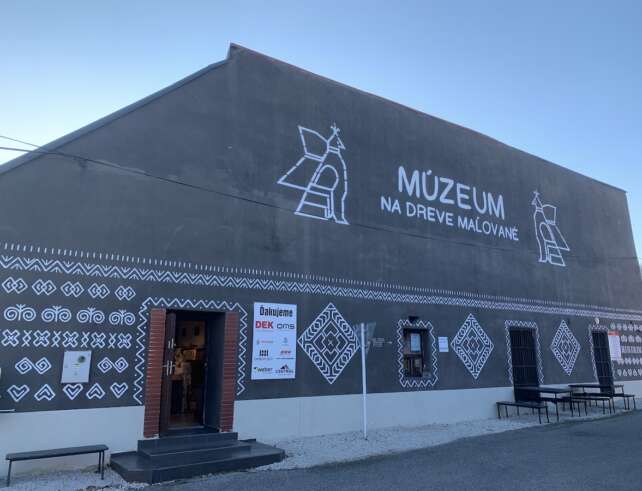
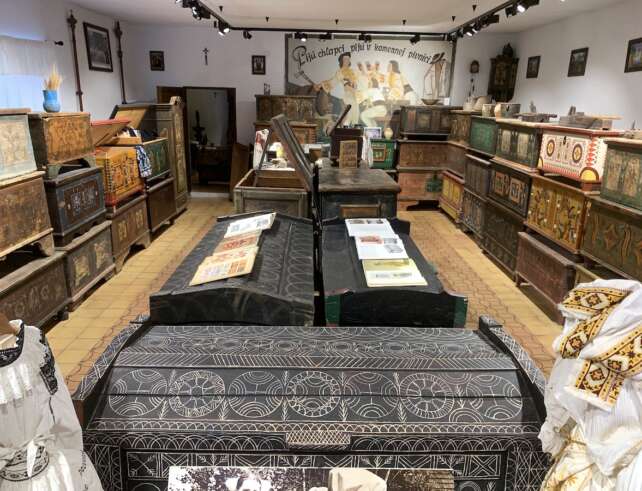
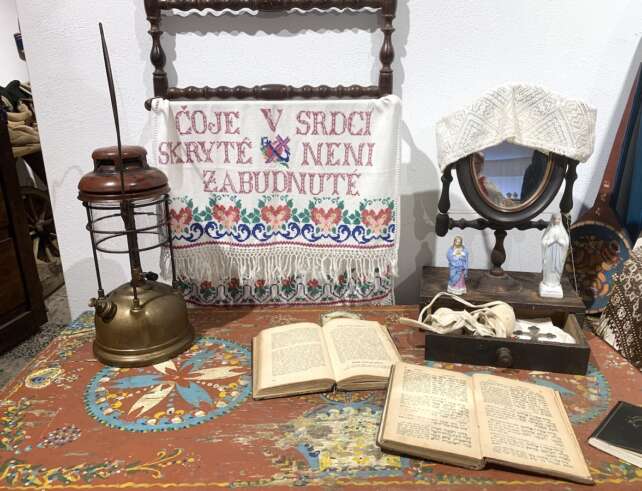
A place you absolutely must visit when in the village of Čičmany is the museum located at No. 13. Housed in a former inn, it features an intriguing exhibition devoted to a topic that many younger visitors may find quite exotic. The exhibition focuses on dowry chests. In the past, these were common in many households, and brides would bring such chests – together with their contents—into marriage.
The chests were often beautifully painted and sometimes even carved. In some cases, they were fitted with surprisingly complex locks for their time, which not infrequently were worth more than the chest itself.
Is It Worth Visiting?
Čičmany is a beautifully located village where traditions are nurtured at every turn. Interesting museums and extraordinary houses make it a place that is definitely worth a visit. Rajecká Valley, in which the village is located, is itself a region well worth exploring, and spending time here is a real pleasure. It’s best to set aside a few hours for your visit so you can calmly discover everything this remarkable place has to offer.
What’s Nearby?
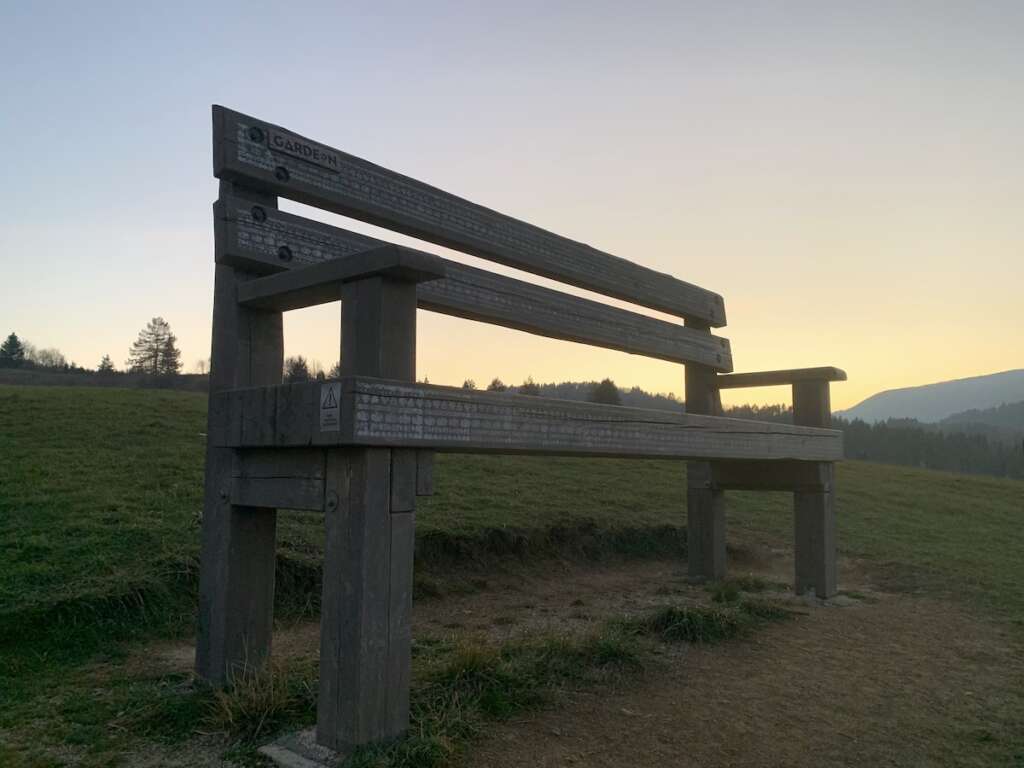
The village itself is fascinating, but while you’re there, be sure to visit the unusual bench located just a few minutes’ walk from the village center—it offers truly stunning views.
Rajecká Valley hides many other interesting places worth seeing. You can visit the largest nativity scene in all of Slovakia, head out on hiking and cycling trails, or relax in spa baths. It’s a region full of passionate people who welcome visitors with open arms.