


Share This Article
The Palace of Knossos on Crete is a place where history intertwines with mythology. According to legend, this is where King Minos built his famous labyrinth, making the Minotaur and Ariadne heroes of ancient myths. The palace ruins, richly decorated frescoes, and monumental columns allow visitors to travel back to the height of the Minoan civilization. It is a must-see on any trip to Crete—for lovers of archaeology and history alike, as well as for those fascinated by mythological stories.
Location and access
The Palace of Knossos is located on Crete, about 5 kilometers south of Heraklion, the island’s capital. Thanks to its proximity to Crete’s largest city and its international airport, Knossos is one of the most easily accessible archaeological sites in the area.
There are several ways to get to the palace: by car, public transport, or as part of an organized tour. A car can be easily rented at the airport or in the city of Heraklion; the drive takes just over a dozen minutes, and the parking area near the entrance is clearly signposted.
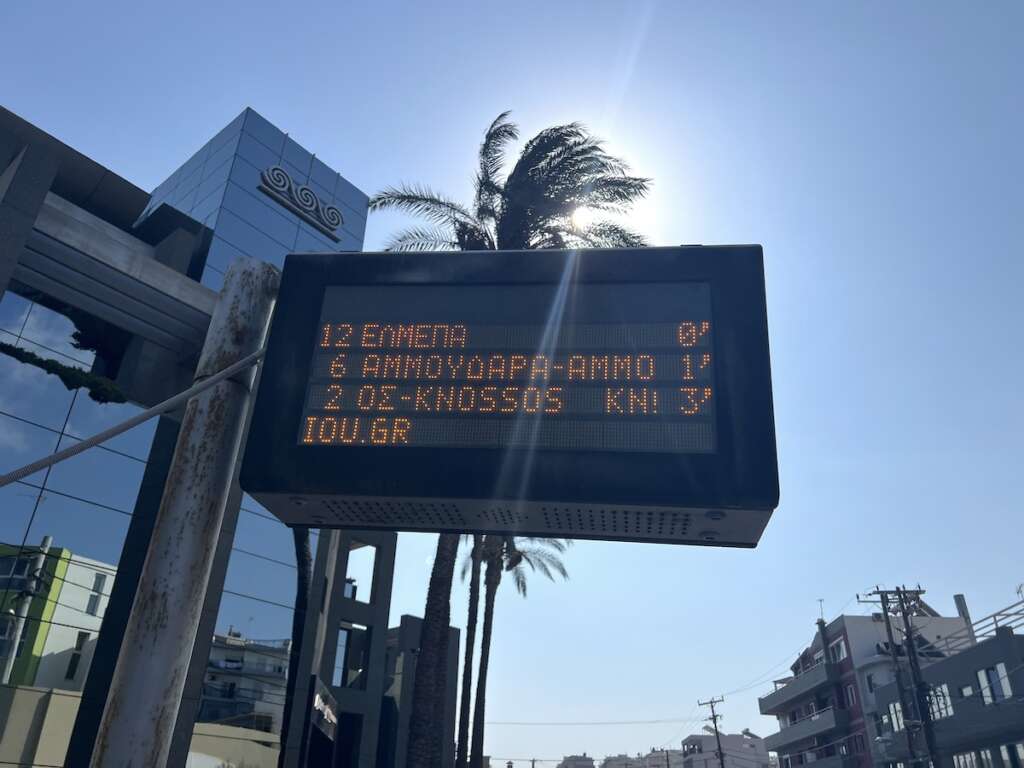
An alternative option is city bus number 2, which runs regularly from the center of Heraklion (near the main bus station). The journey takes about 20 minutes and ends right next to the ticket office. A ticket costs €1.70, and along the way you can enjoy views of Heraklion. Knossos is well connected to Crete’s main roads, making it an essential stop even during a shorter stay on the island.
The Palace of Knossos – ticket prices and opening hours
The Palace of Knossos is open to visitors every day, with opening hours adjusted to the tourist season. In summer (from April to October), the site is usually open from 8:00 a.m. to 8:00 p.m., giving plenty of time to explore the ruins at a relaxed pace.
In winter, visiting hours are shorter and typically end at 5:00 p.m. It’s best to arrive early in the morning or in the early afternoon—this way you can avoid the largest crowds and the heat, which can be quite intense on Crete.
Ticket prices depend on the visitor’s age and status. A standard ticket costs €20, while children and young people under 18 can enter free of charge. An interesting option is the combined ticket for €20, which includes entry to both Knossos and the Heraklion Archaeological Museum—highly recommended for anyone who wants to fully understand the context of Minoan civilization.
Tickets can be purchased on site, but long queues are common in summer, so booking online is a convenient alternative. In addition, on selected days of the year (including International Museum Day and the national OXI Day holiday), admission to Knossos is free, which attracts even larger numbers of visitors. We bought our tickets on site, so we were prepared for a queue. At first, the line looked intimidating, but in the end we waited only about 15 minutes. Ticket sales are very well organized, and the entire queue is shaded by pergolas.
You can buy online tickets directly here.
A brief history of the Palace of Knossos
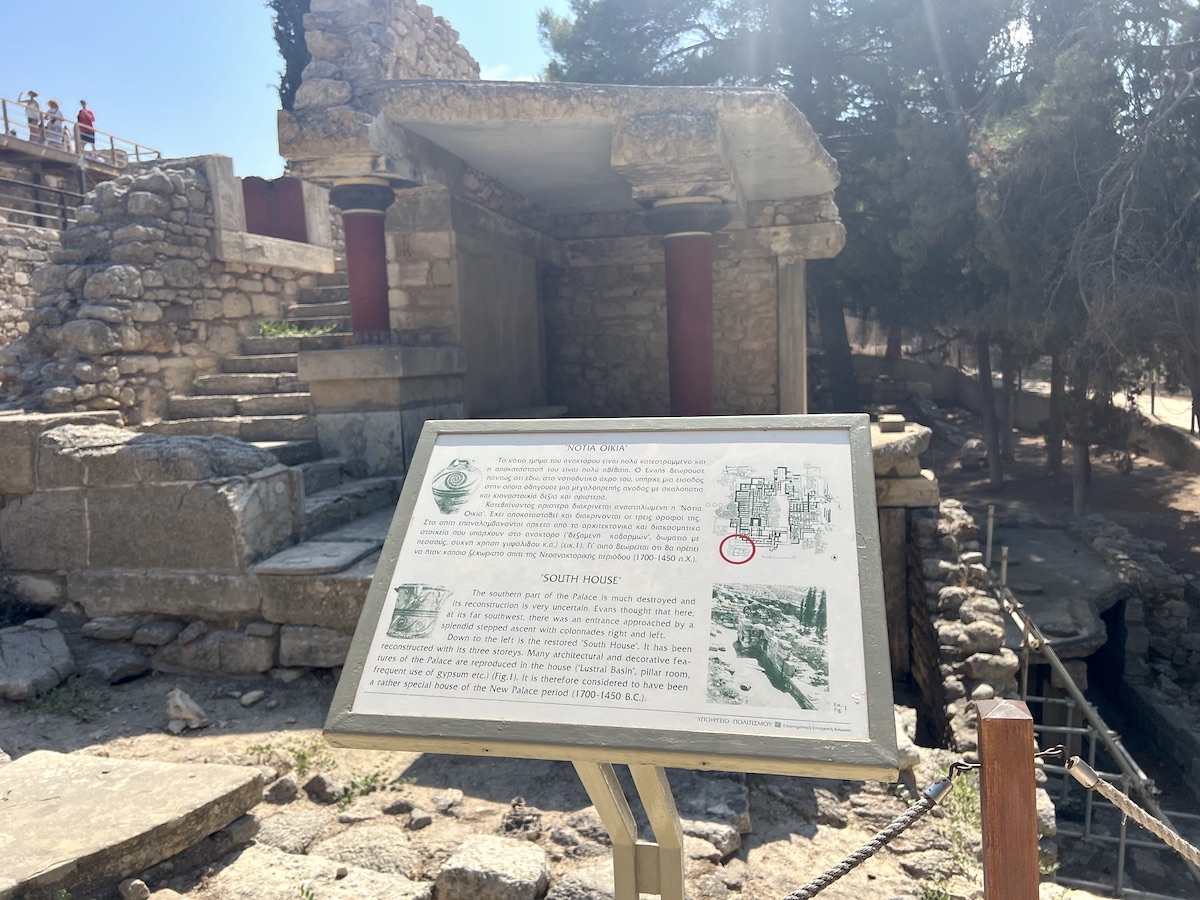
Knossos is the most important archaeological site on Crete, associated with the Minoan civilization—considered by many scholars to be the first advanced culture in Europe. The origins of the palace date back to around 2000 BC, and its development continued over several centuries. The palace complex served not only as the residence of the ruler but also as the administrative, religious, and economic center of the entire island. It housed, among other things, storerooms for grain, olive oil, and wine, craft workshops, ceremonial chambers, as well as an extensive system of communication routes and drainage, regarded as one of the most advanced in the ancient world.
The Palace of Knossos was repeatedly destroyed by earthquakes and subsequently rebuilt, which gave it a complex layout with numerous corridors and courtyards. The complex reached its peak during the so-called “New Palace” period, around 1675–1450 BC. The ruins of Knossos were first discovered at the end of the 19th century by a local archaeologist, Minos Kalokairinos, but it was the British archaeologist Arthur Evans who carried out extensive research at the site.
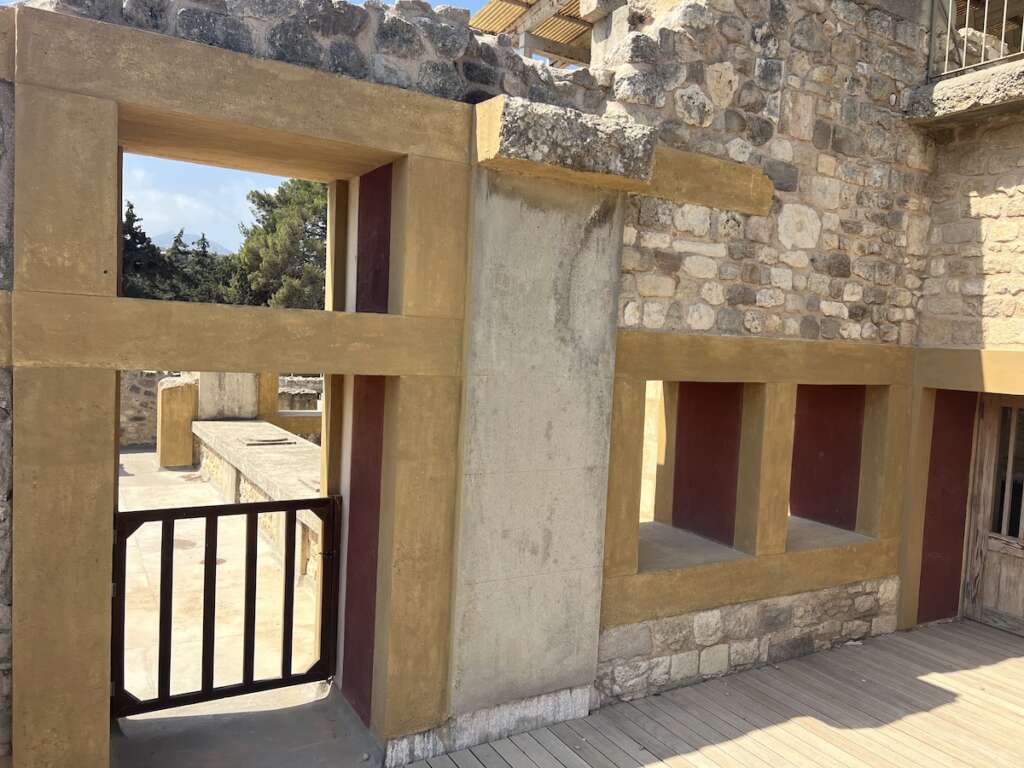
Under his supervision between 1899 and 1905, not only were systematic excavations conducted, but parts of the palace were also reconstructed using what were then modern conservation techniques. Thanks to Evans, visitors today can admire reconstructed frescoes and architectural elements. Although his methods remain controversial among historians, it was Evans who turned Knossos into the most important symbol of the Minoan civilization and one of the key sites on the map of the ancient world.
The Minotaur, Ariadne, and Mythology
Knossos is not only a site of ancient ruins it is also a place shrouded in legends that have fascinated travelers for centuries and haunted generations of students reading Greek Mythology at school. According to myth, the palace was the seat of King Minos, the son of Zeus and Europa.
Legend has it that this was the location of the famous labyrinth designed by the brilliant architect Daedalus. The labyrinth was meant to imprison the monster Minotaur-half man, half bull. Myths tell, among other things, that each year young people were sacrificed to the Minotaur. The hero of this story is Theseus, who slew the beast and escaped the labyrinth thanks to the help of Ariadne, Minos’s daughter. She gave him a thread that allowed him to find his way out of the maze-like corridors.
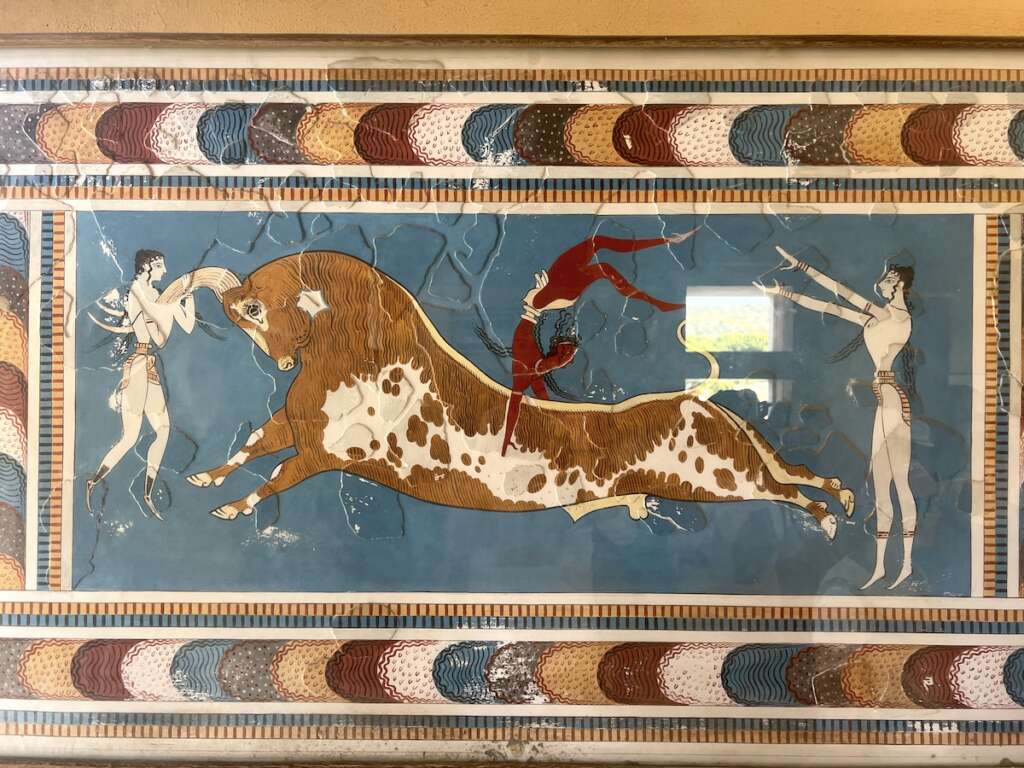
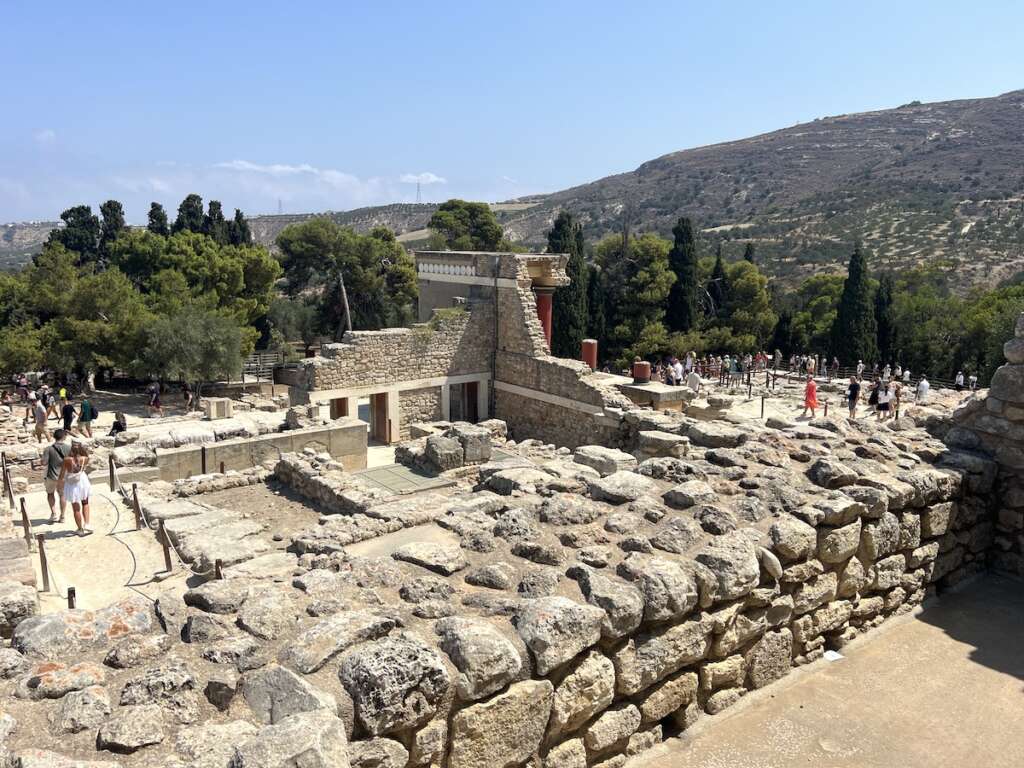
Many scholars believe that the complex layout of the Palace of Knossos-full of narrow passageways, courtyards, and chambers-may have given rise to this legend. Frescoes and sculptures discovered at Knossos depict scenes involving bulls, including the famous “bull-leaping” motifs, which further strengthen the site’s connection to mythological narratives. The myth of the Minotaur and Ariadne became one of the foundations of European culture, and Knossos its tangible symbol. Today, while walking among the ruins, one can almost feel that they still echo with ancient myths.
The Palace of Knossos – present condition
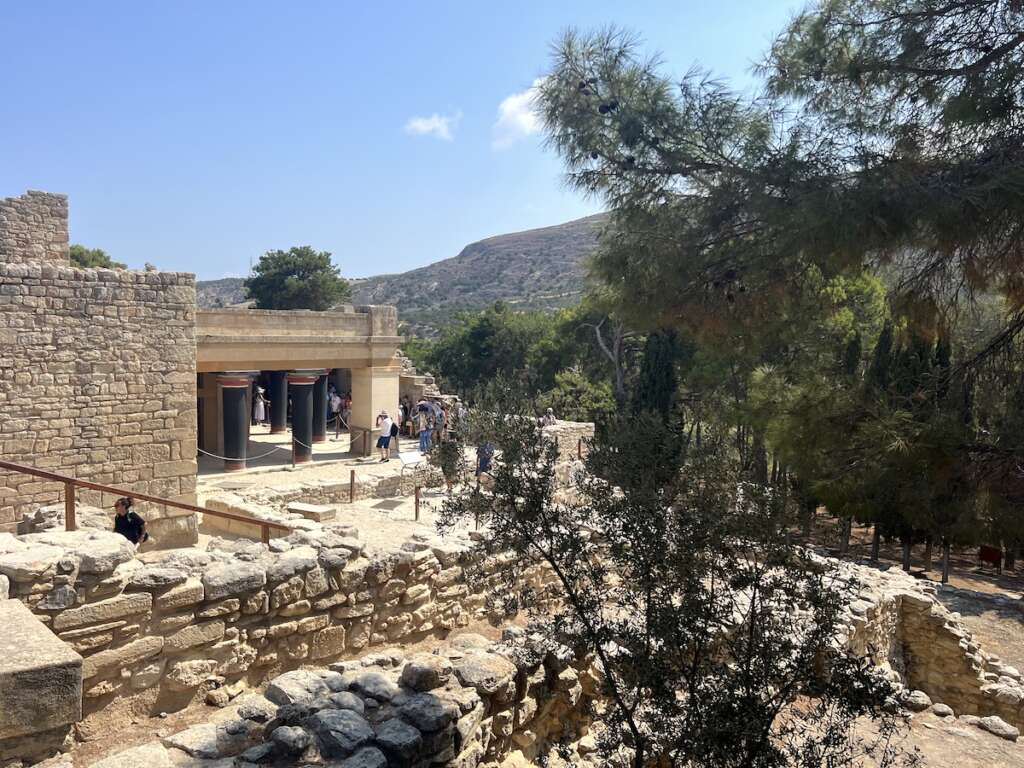
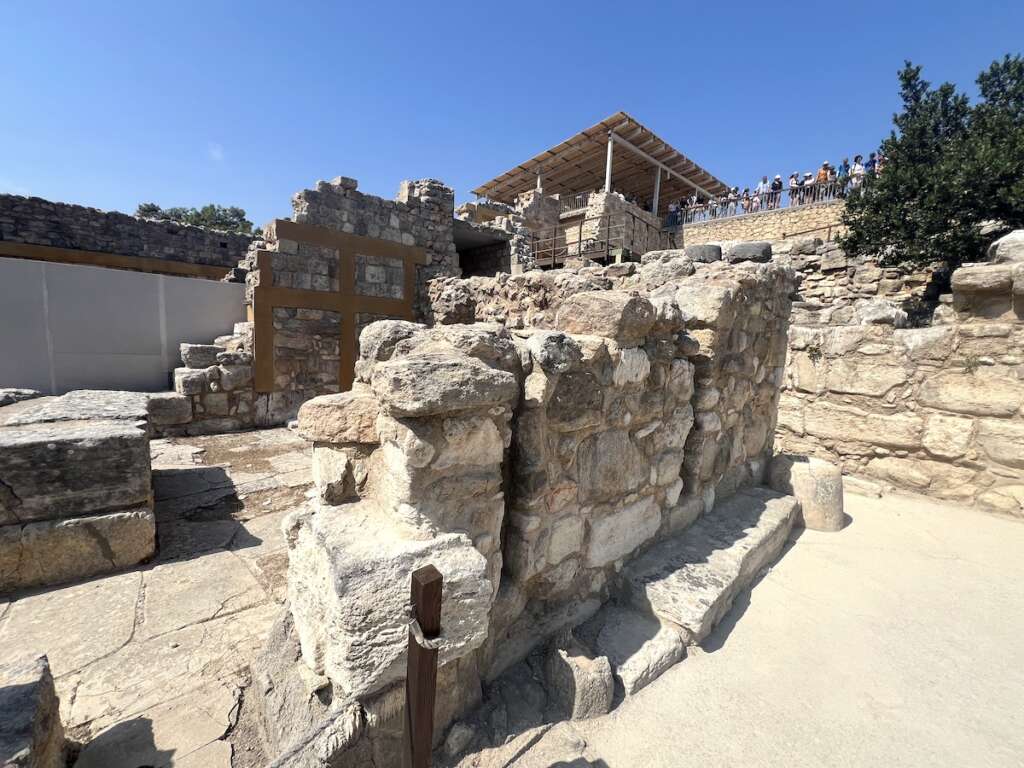
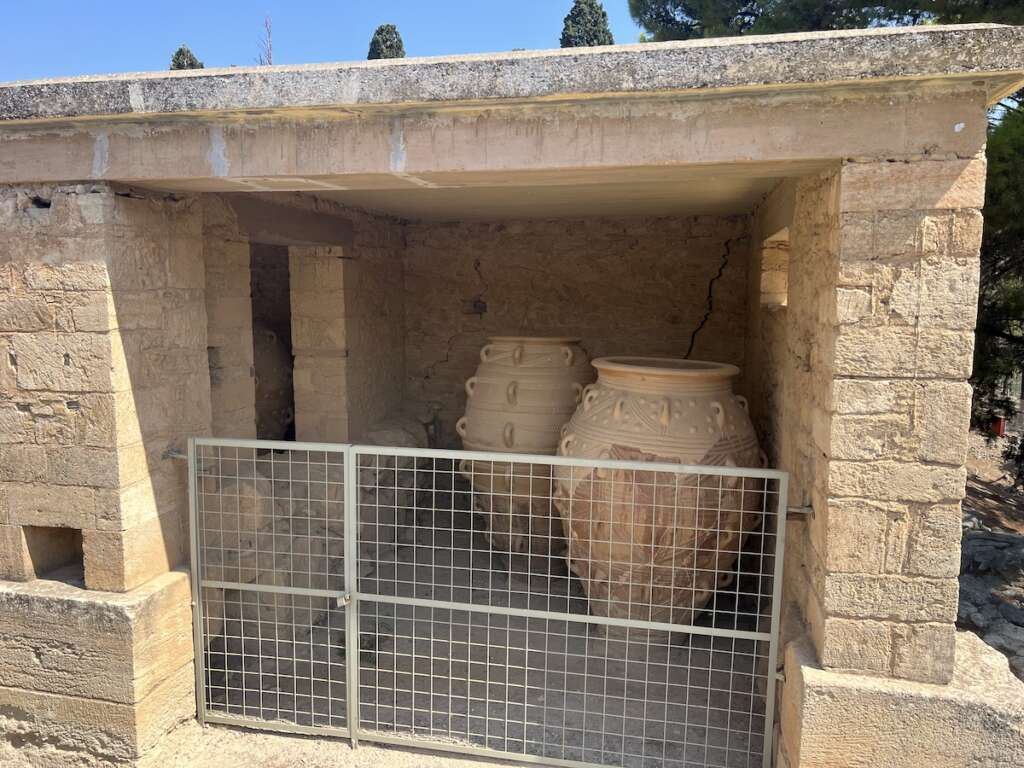
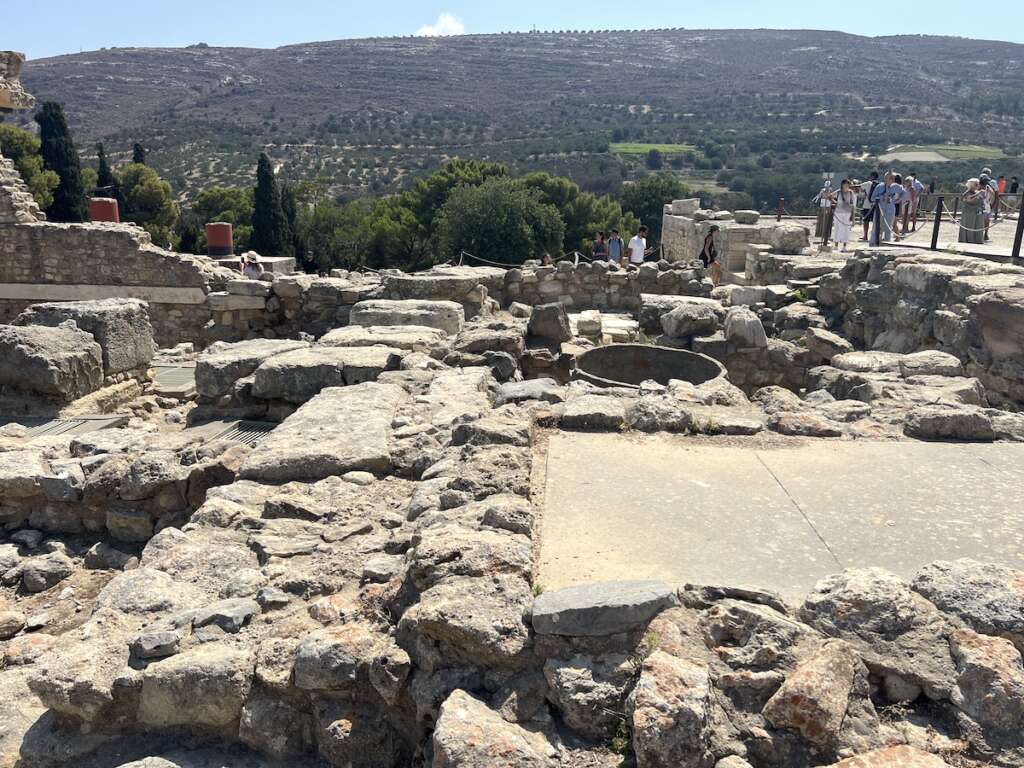
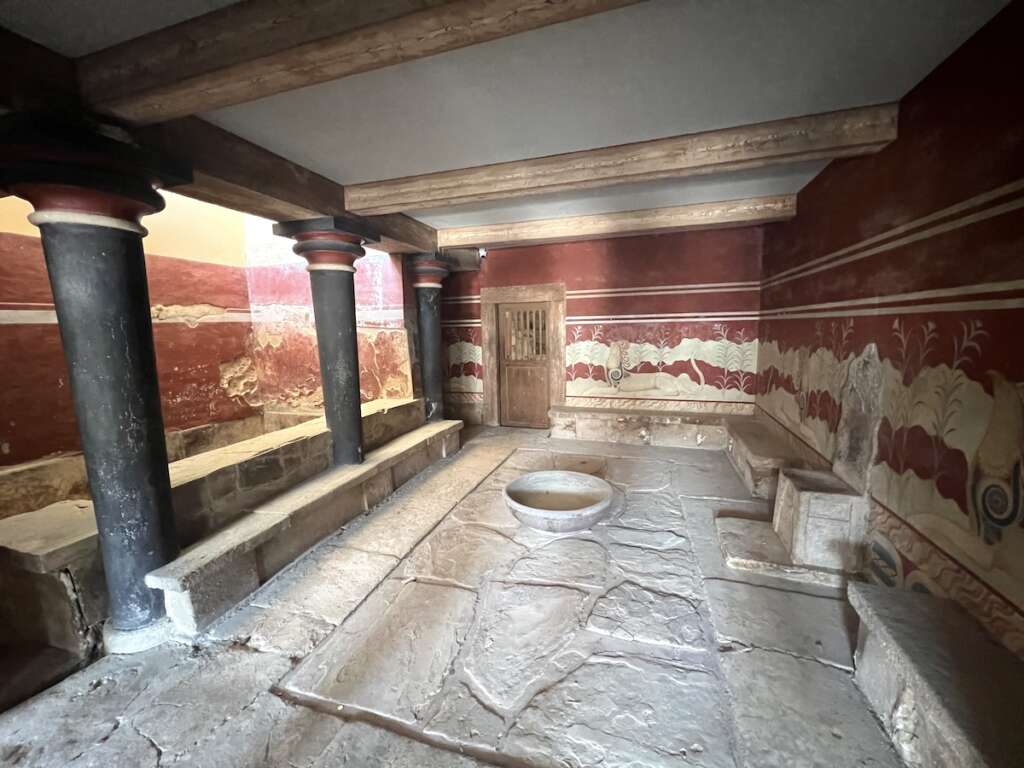
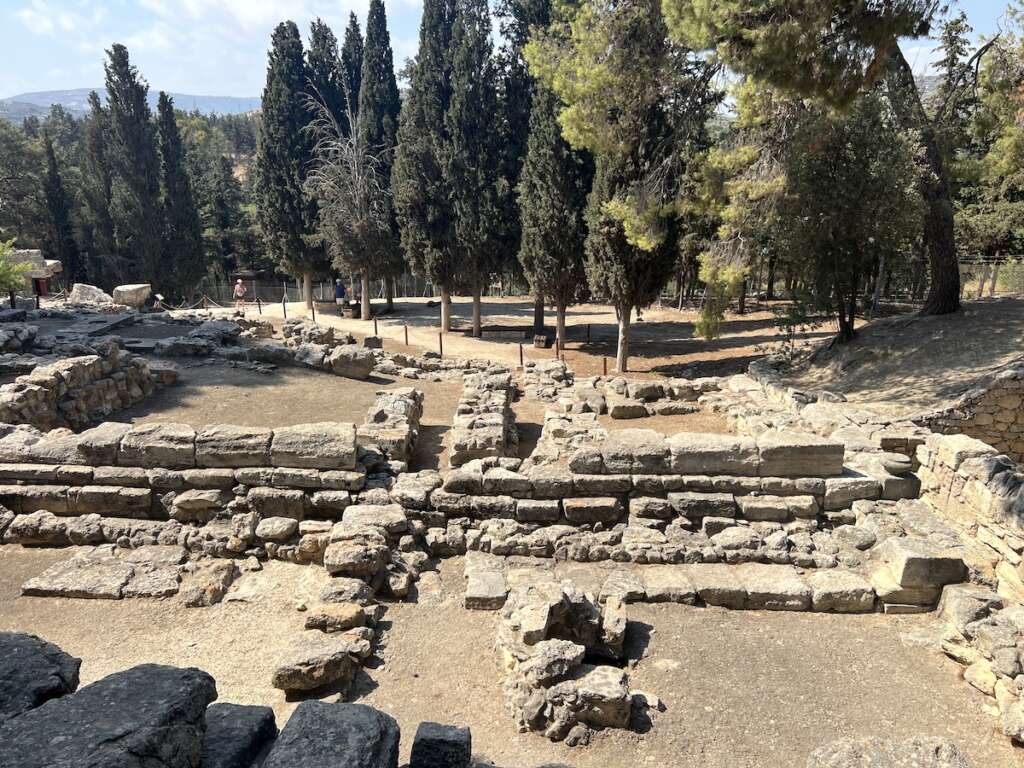
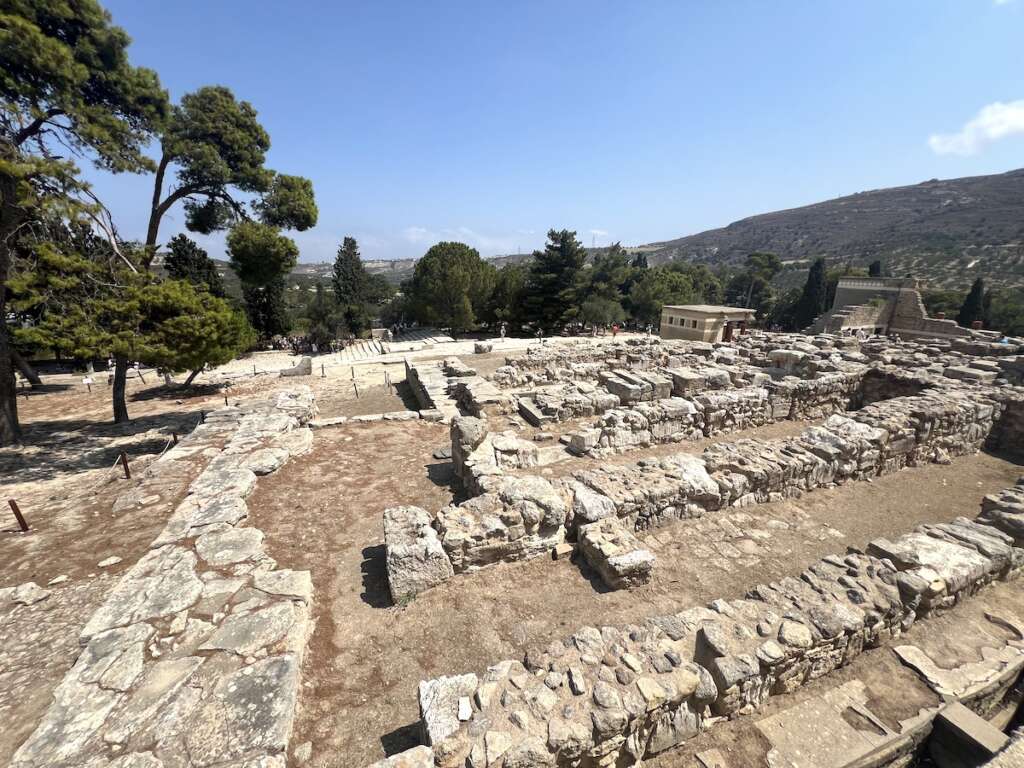
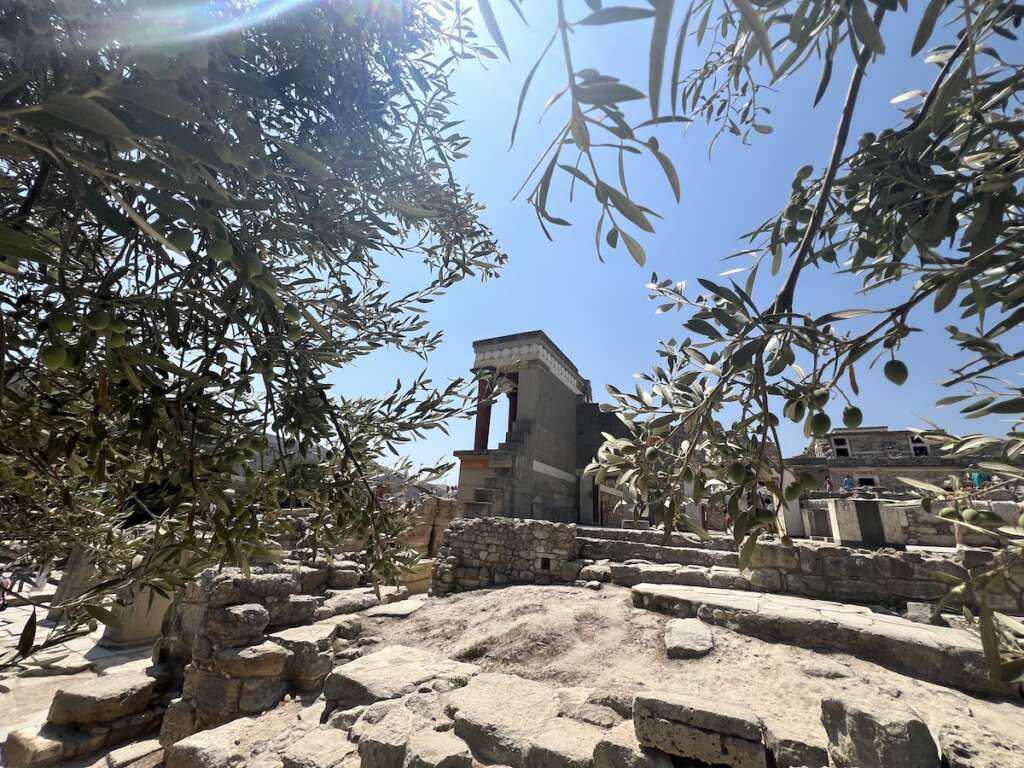
Today, the Palace of Knossos is a vast archaeological site covering several hectares, where visitors can admire the remains of the Minoan complex. Monumental staircases, fragments of columns, water-management systems, and numerous storage rooms have survived, where olive oil and grain were kept during the palace’s heyday.
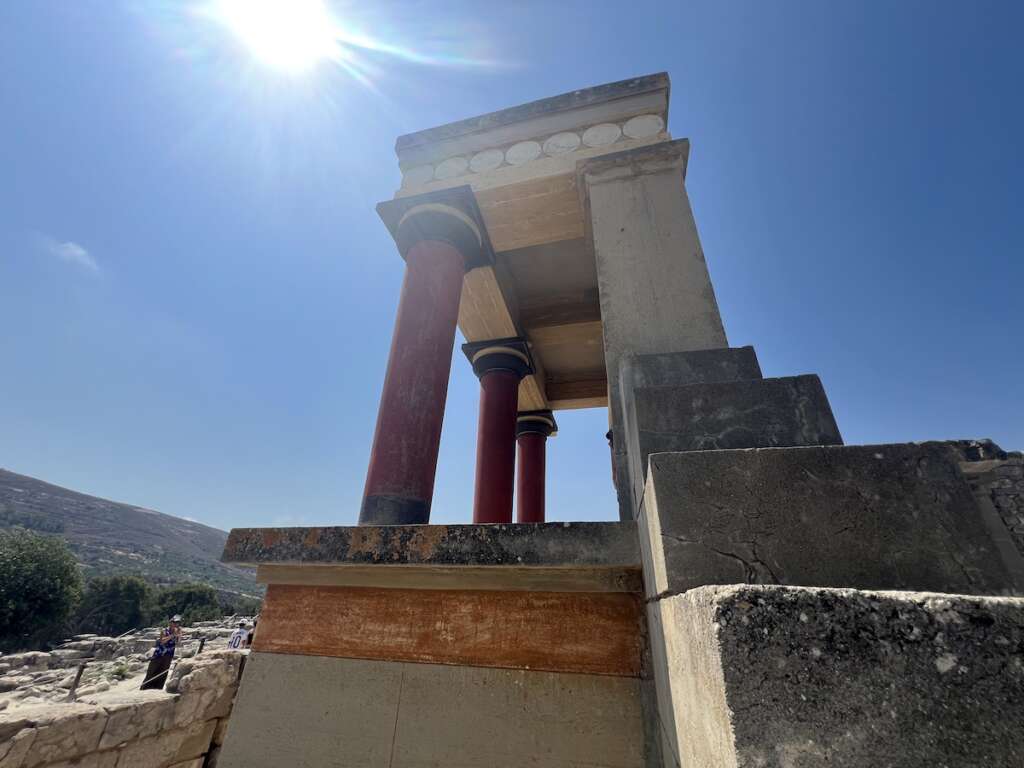
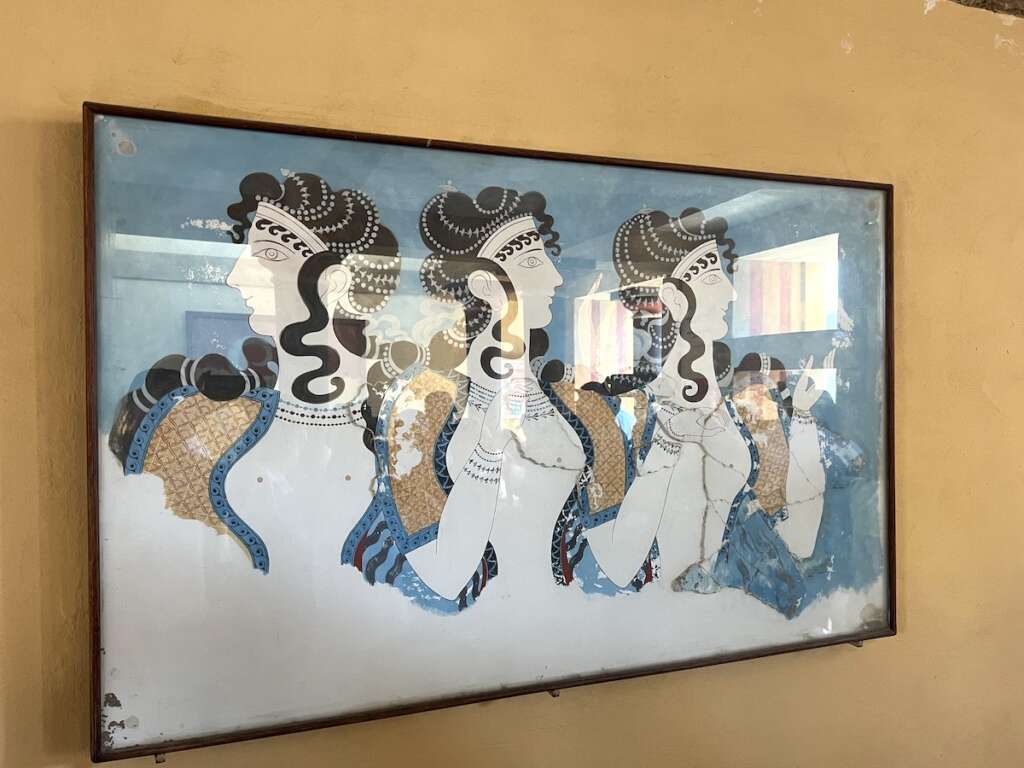
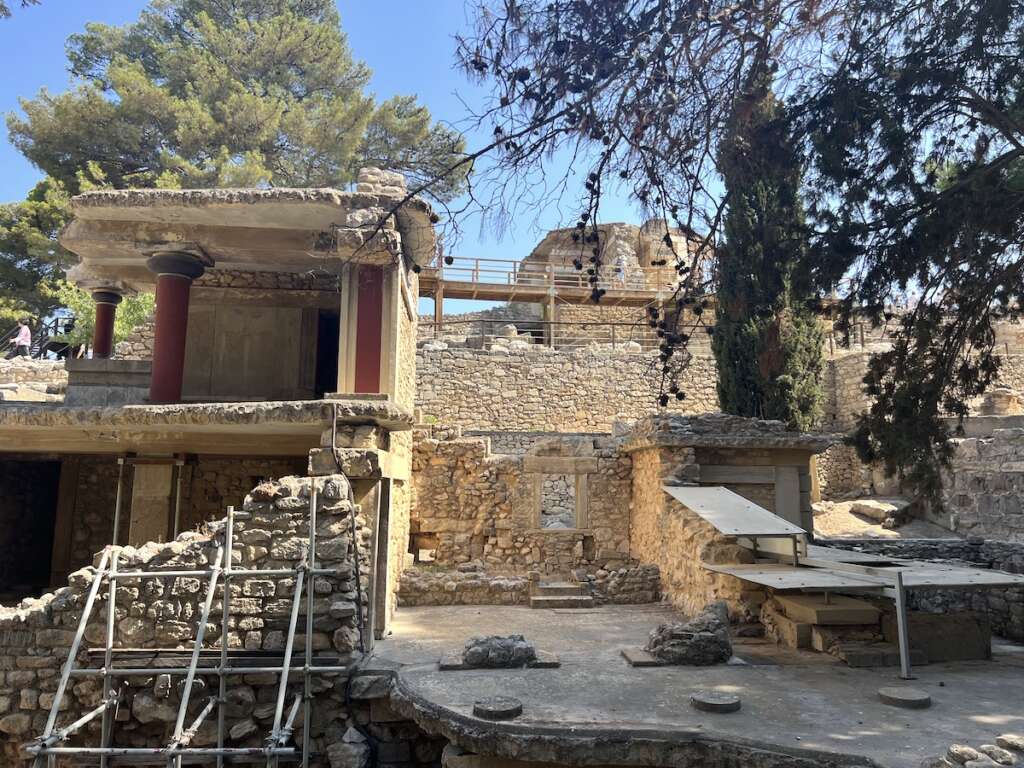
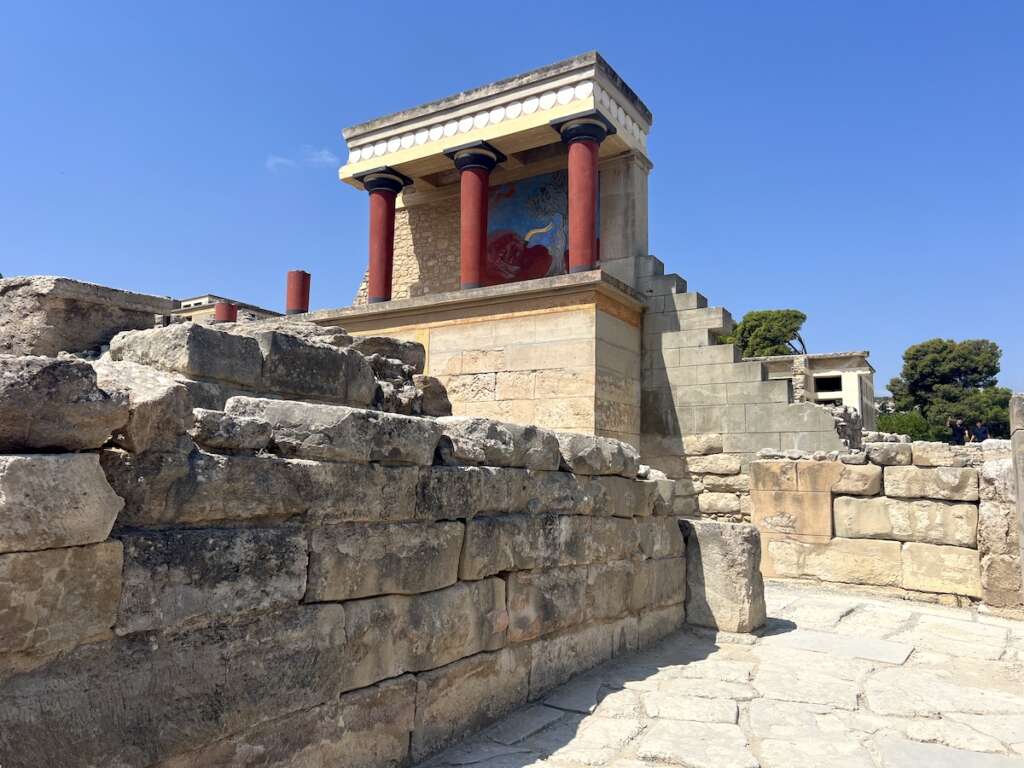
The most characteristic and instantly recognizable elements of the Palace of Knossos are the red columns, partially reconstructed by Arthur Evans, as well as the frescoes—both original and reconstructed. One of the most famous is the dolphin fresco decorating the Queen’s Megaron. Although some scholars criticize Evans’s reconstructions as overly bold and somewhat speculative, they undeniably help visitors better imagine what life in the ancient palace may have looked like.
Today, the Knossos site is well prepared for tourists, with marked paths, information boards, as well as guides and audio guides available in many languages. It is worth remembering, however, that a large part of the finds—including the original frescoes and many artifacts—are housed in the Heraklion Archaeological Museum, which is best visited on the same day. The Palace of Knossos combines authentic ruins with reconstructed elements, creating a unique blend of history and imagination.
Is It worth visiting?
The Palace of Knossos is one of the most important archaeological sites in Greece and should be on the list of every traveler visiting Crete. It is a place where you can truly feel the atmosphere of a civilization that flourished four thousand years ago, “touch” the foundations of European culture, and see a setting where mythology feels strikingly real.
A visit to Knossos is not only a walk in the footsteps of ancient rulers, but also an opportunity to reflect on how remarkably advanced the Minoan civilization was for its time—with its drainage and ventilation systems, vibrant frescoes, and well-developed trade networks. Although the archaeological site can be crowded and some of Arthur Evans’s reconstructions provoke mixed reactions, it is undoubtedly worth the visit.
Combining a trip to Knossos with a visit to the Heraklion Archaeological Museum offers a complete picture of ancient Crete and helps explain why this place is often called the cradle of European civilization. It is a must-see not only for history and mythology enthusiasts, but also for families with children, who will surely be captivated by the legend of the Minotaur and Ariadne. The Palace of Knossos proves that history and myth can still inspire and fascinate us today.