


Share This Article
Moravia is famous for its wine – aromatic, sun-filled, and rooted in traditions that have shaped the region’s landscape for generations. One of the most charming places connected with this culture is Vlčnov and its wine cellars. This small village is located near Uherský Brod, in the southeastern part of the Czech Republic, in the Slovácko region.
It is a place where time seems to slow down and the views take your breath away. Winemakers from Vlčnov and the surrounding area have cultivated their craft for centuries, passing down the secrets of vine growing and wine production from generation to generation. The cellars, grouped in picturesque rows, create a setting where history meets passion and flavor. If you are looking for an authentic Moravian atmosphere, Vlčnov and its wine cellars are an ideal stop on a journey through Eastern Moravia.
Location and Access
Vlčnov is a picturesque village located in the southeastern part of Moravia, in the Zlín Region, near the town of Uherské Hradiště. The village lies about 10 kilometers southeast of this historic center and around 25 kilometers from Zlín. Despite its intimate, rural character, Vlčnov is very well connected. By car, it can be reached via a national road from Uherské Hradiště, followed by a local route leading directly to the village center. Travelers without a car can use trains or buses – nearby towns have stops from which it is easy to reach Vlčnov.
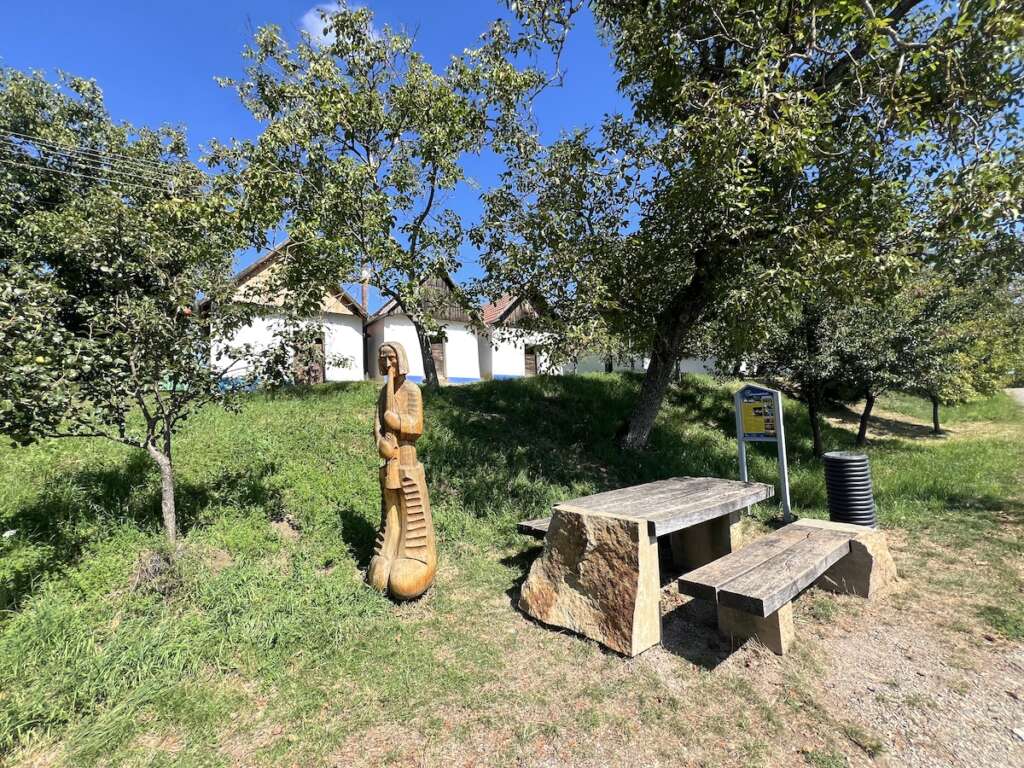
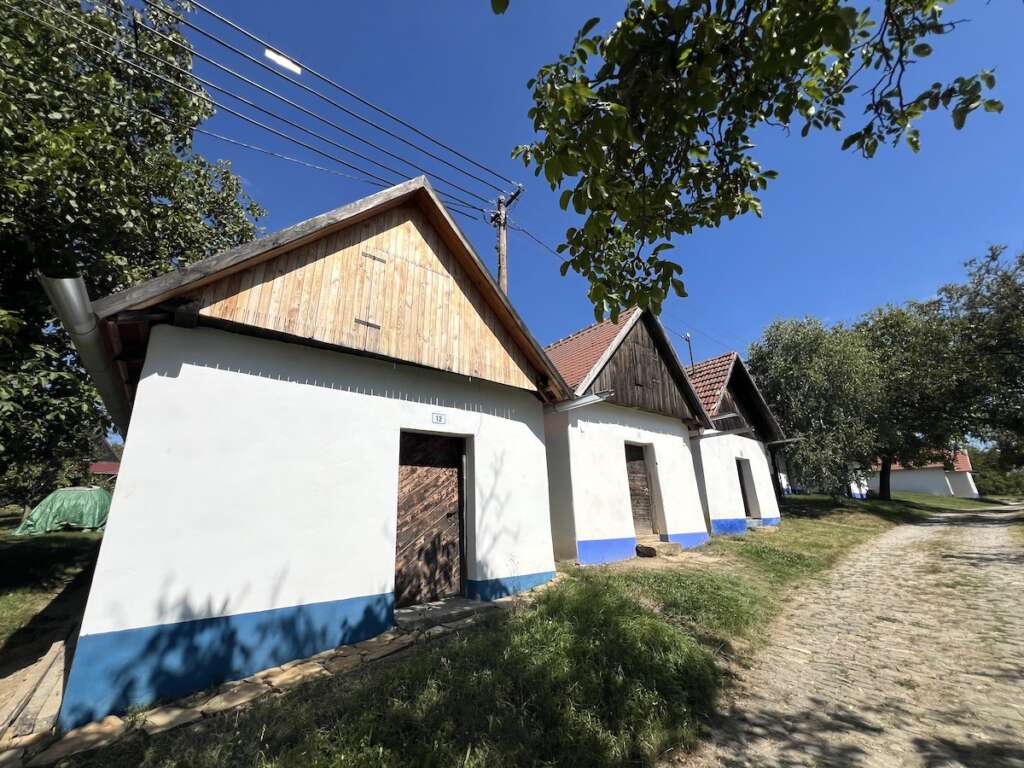
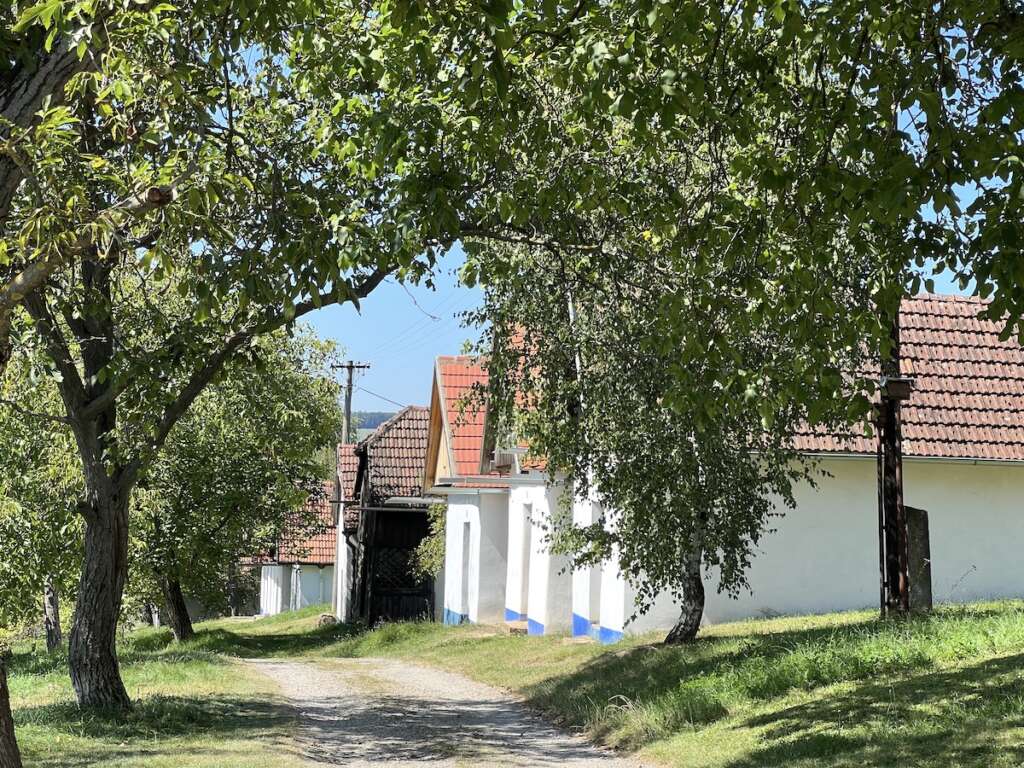
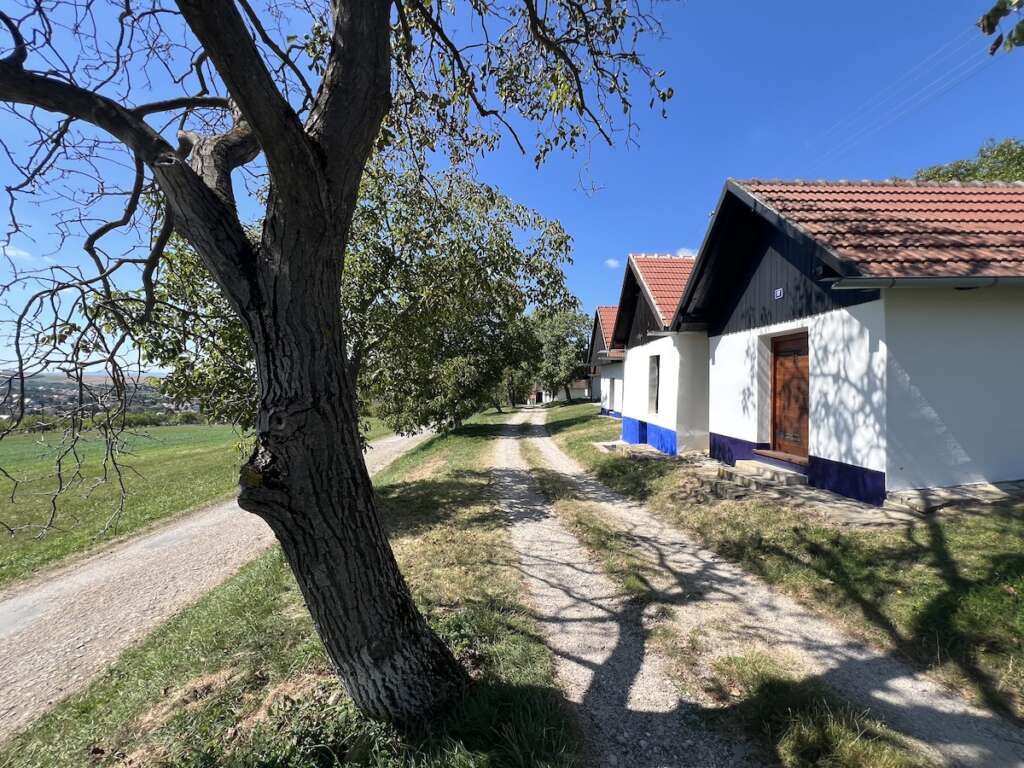
Once there, it is best to leave your car in the village center or at the entrance to the village and continue on foot to fully absorb the atmosphere of the place. The characteristic wine cellars, known locally as búdy, are scattered across the surrounding hills and valleys. Their whitewashed fronts and colorful doors create a picturesque landscape that has been a hallmark of the region for centuries. The area is also crossed by marked cycling routes that are part of the broader Slovácko wine trail. This offers a great opportunity to combine tasting local wines with active relaxation among the rolling Moravian hills.
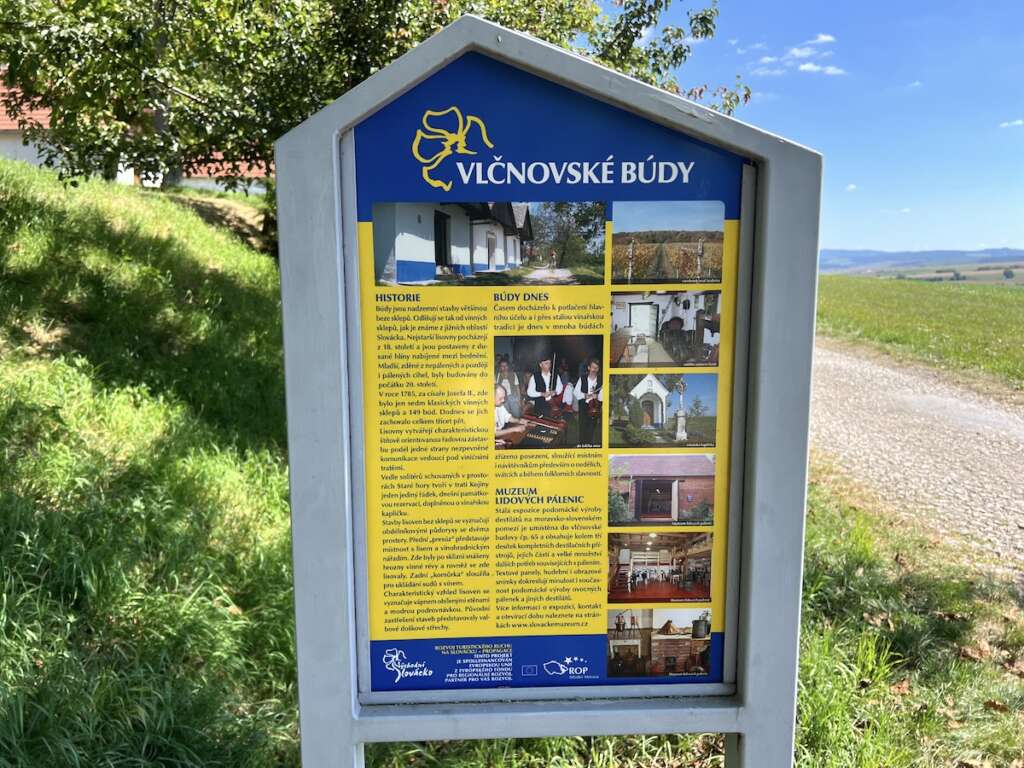
History of the Wine Cellars
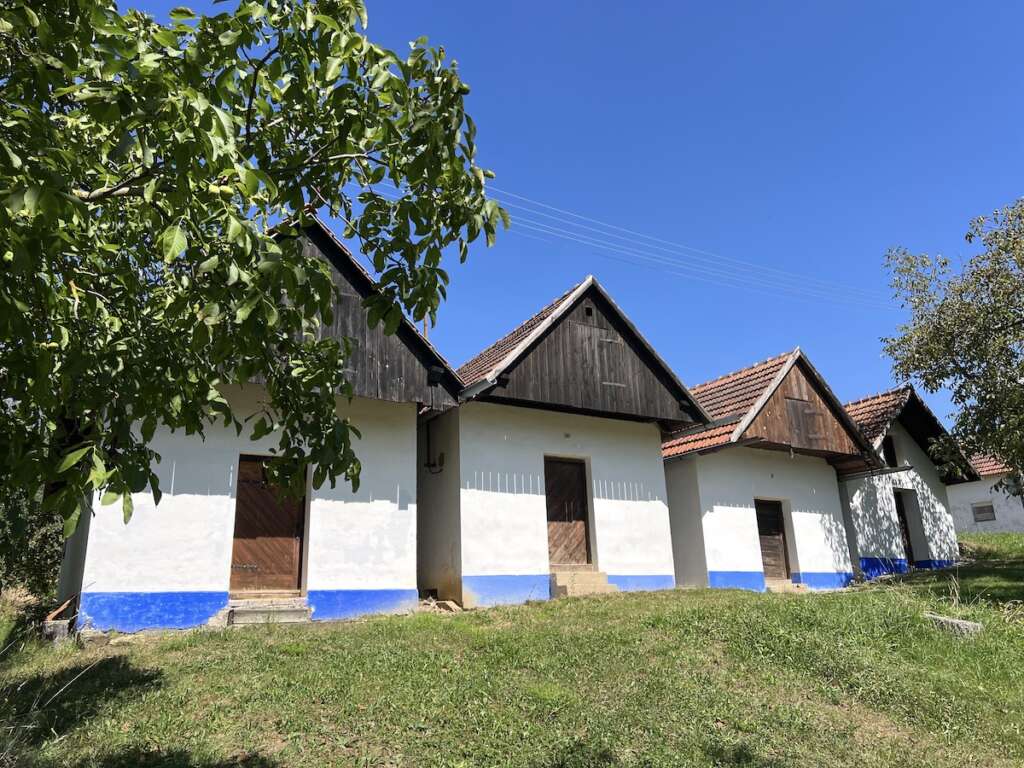
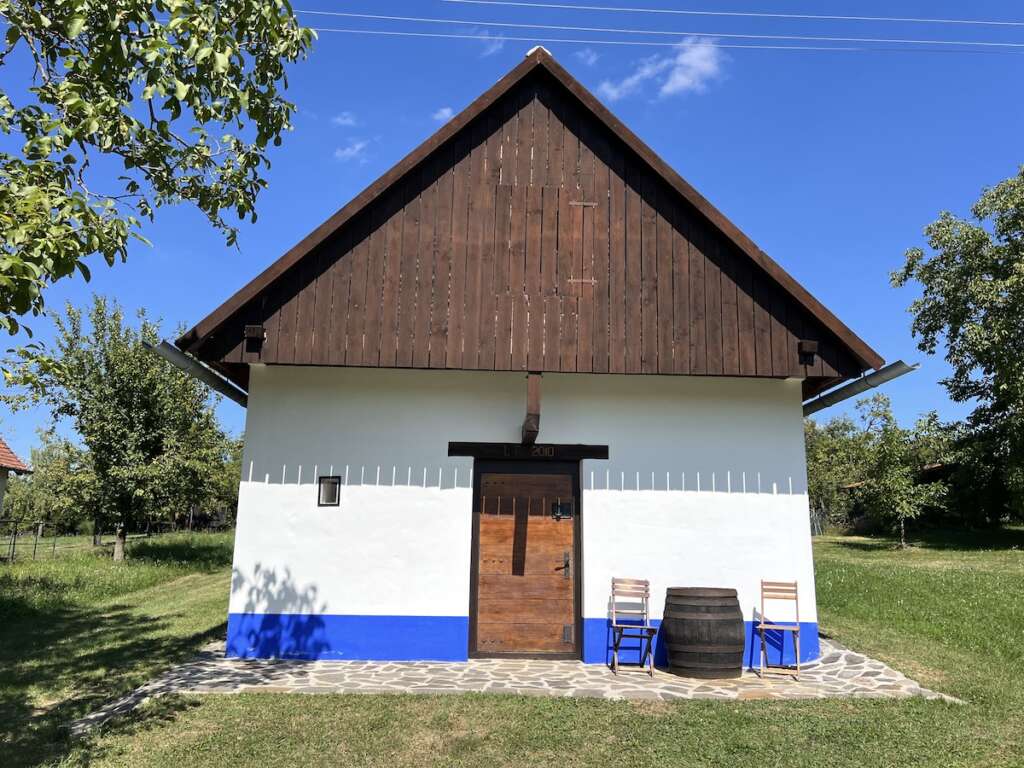
The wine cellars in Vlčnov are a unique example of traditional folk architecture closely connected with viticulture. They were built mainly in the 19th and early 20th centuries, during a period when winemaking in the region was flourishing. Although vineyards had existed here much earlier, it was only then that the characteristic wine buildings began to appear—small house-like structures with stone cellars. Each cellar belonged to a specific winemaking family, and above the entrances one can often see construction dates or family symbols.
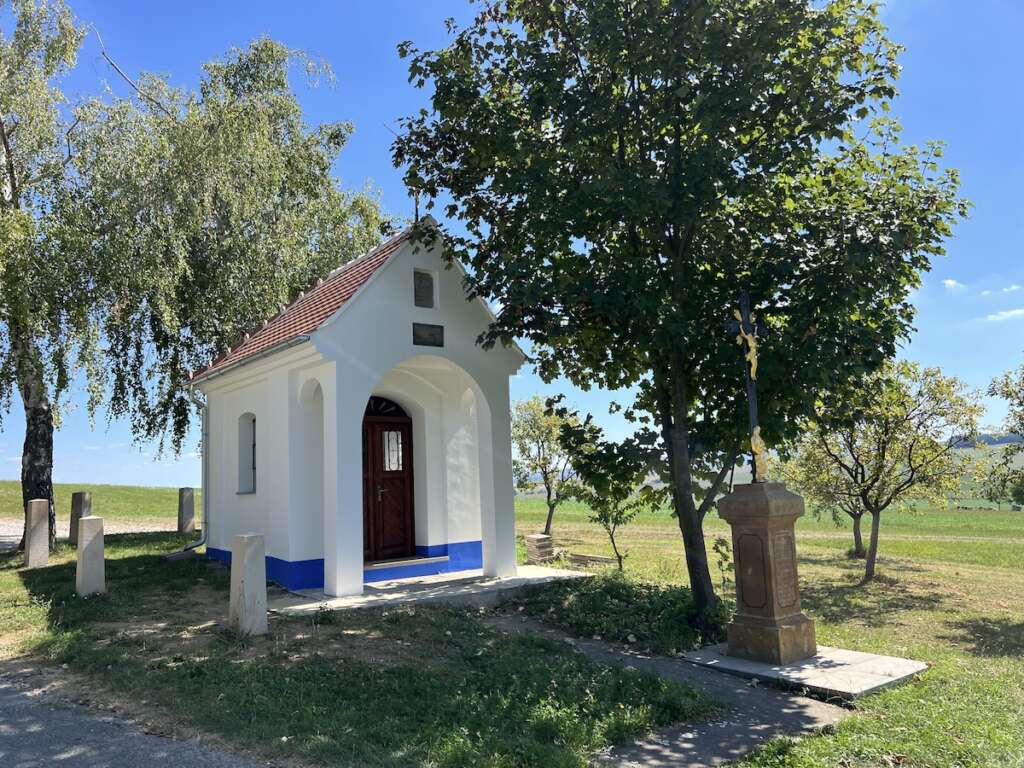
The búdy were built from local materials such as stone, clay, and wood. Their interiors were cool and dark, providing ideal conditions for storing wine. Over time, winemakers began to give them a more decorative character—facades were whitewashed with lime, doors and shutters were painted blue, and ornamental cornices were added above the entrances. Today, this part of the village, known as “Kojiny,” is a true open-air museum of wine architecture and is protected as a heritage site.
Walking among the cellars, one can almost feel the atmosphere of bygone days, when neighbors gathered here in the evenings, talked over wine, and celebrated the end of the grape harvest. It is precisely this natural, unhurried, and welcoming ambiance that has allowed Vlčnov to preserve its authenticity despite the passage of time.


Winemaking in the Region
Vlčnov lies in the Slovácko region, one of the most important winemaking areas in Eastern Moravia. Local wines are known for their lightness, freshness, and rich aromatic profiles, shaped by both the climate and traditional production methods. White grape varieties dominate here, including Müller-Thurgau, Veltlínské zelené (Grüner Veltliner), and Rulandské bílé (Pinot Blanc). Red varieties are less common, with Frankovka (Blaufränkisch) and Modrý Portugal (Blauer Portugieser) being the most typical.
In Vlčnov, winemaking is carried out mainly by small, family-run vineyards that pass down their knowledge from generation to generation. Their owners often open their cellars to visitors, offering tastings in an intimate and welcoming atmosphere. Wines can be purchased directly from producers, as well as in local shops and during wine festivals that regularly take place throughout the region.
Winemaking in this part of Moravia is more than just alcohol production—it is a way of life and an essential part of local identity. Every family has its own recipe, traditions, and rituals connected with the grape harvest. A visit to Vlčnov is therefore not only an opportunity to taste wine, but also to meet people who passionately preserve the heritage of their ancestors.
Information about local winemakers can be found at:
http://www.vlcnov-vinari.eu

What’s Nearby?
The surroundings of Vlčnov offer much more than vineyards—they are also rich in folk culture and beautiful landscapes. One of the most important events of the year is the famous Jízda králů (Ride of the Kings), a traditional ceremony inscribed on the UNESCO Intangible Cultural Heritage list. During the event, a colorful procession in traditional folk costumes rides through the village streets, attracting visitors from all over Europe.
It is also worth visiting the Museum of Folk Distilleries (Muzeum lidových pálenic), which presents the history of fruit spirit distillation—the second most important element of local tradition after wine. Nature lovers will appreciate the walking and cycling routes leading through the gentle Moravian hills. Nearby Uherské Hradiště offers numerous historical landmarks, galleries, and restaurants serving regional cuisine.

Is It Worth Visiting?
Without a doubt—yes. Vlčnov is one of those places that captivates with its tranquility, authenticity, and unique atmosphere. It is a village where time seems to slow down and wine tastes better than anywhere else. The wine búdy, hidden among gentle hills, combined with Moravian folklore, create an unmistakable sense of place.
A visit here is a perfect opportunity to experience southern Moravia from a different perspective—not through large cities or modern wineries, but through direct contact with people who still live in harmony with nature and tradition. Tasting local wines, strolling among historic cellars, taking part in one of the local festivals, or simply relaxing in the shade of the vines are memories that linger long after the trip.
Vlčnov is not only a point on the Czech wine map, but also a living museum of traditions, flavors, and Moravian hospitality. If you are planning a journey through the Zlín Region or Slovácko, be sure to add this place to your itinerary.