


Share This Article
Vienna Central Cemetery (Zentralfriedhof) is one of the most extraordinary places of remembrance in Europe – a vast, green necropolis that brings together history, culture, and architecture. It is not only the final resting place of outstanding figures, but also a space for walks, reflection, and an encounter with the city’s multicultural and multinational past.
It is the second-largest cemetery in Europe by area and the largest in terms of the number of burials. Believe us – it really is enormous. If you plan to walk through the entire cemetery, make sure to bring water, wear comfortable shoes, and set aside at least half a day.
Vienna Central Cemetery – location and access
Vienna Central Cemetery (Zentralfriedhof) is located in the south-eastern part of the city, in the 11th district of Simmering. It is a vast 2.5-kilometre-long complex that functions almost like a small city, complete with a network of avenues, a church, several entrance gates, and extensive burial sections. Getting there is very convenient for both residents and tourists – you do not need a car to reach the cemetery grounds. The easiest way is by tram line 71, which terminates right at the main entrance. For those travelling by metro, the best option is line U3 with a transfer to the tram – the entire journey from the city centre takes around 25–30 minutes.
For drivers, several convenient parking areas are available near the entrance gates. Vienna Central Cemetery is extremely extensive, so it is worth getting hold of a map – available on information boards at the entrances or on the cemetery’s official website. Thanks to the clear layout of the avenues, it is easy to reach the most important memorial sites, especially if you plan to visit the graves of famous individuals scattered across different parts of the necropolis.
Under certain conditions, cars are allowed to drive within the cemetery grounds. Elderly visitors or those with limited mobility can apply for special permission. It is also possible to hire a traditional horse-drawn carriage for a ride around the cemetery.
Up-to-date information about the cemetery can be found on its official website, although unfortunately it is available only in German.
About the cemetery and its sections
Vienna Central Cemetery is one of the largest cemeteries in the world in terms of the number of burials – more than 3 million people are laid to rest here, and new graves are still in use today. The cemetery grounds are divided into dozens of numbered sections. Different areas are dedicated to specific religious denominations, nationalities, professional groups, and figures who made significant contributions to Austria.
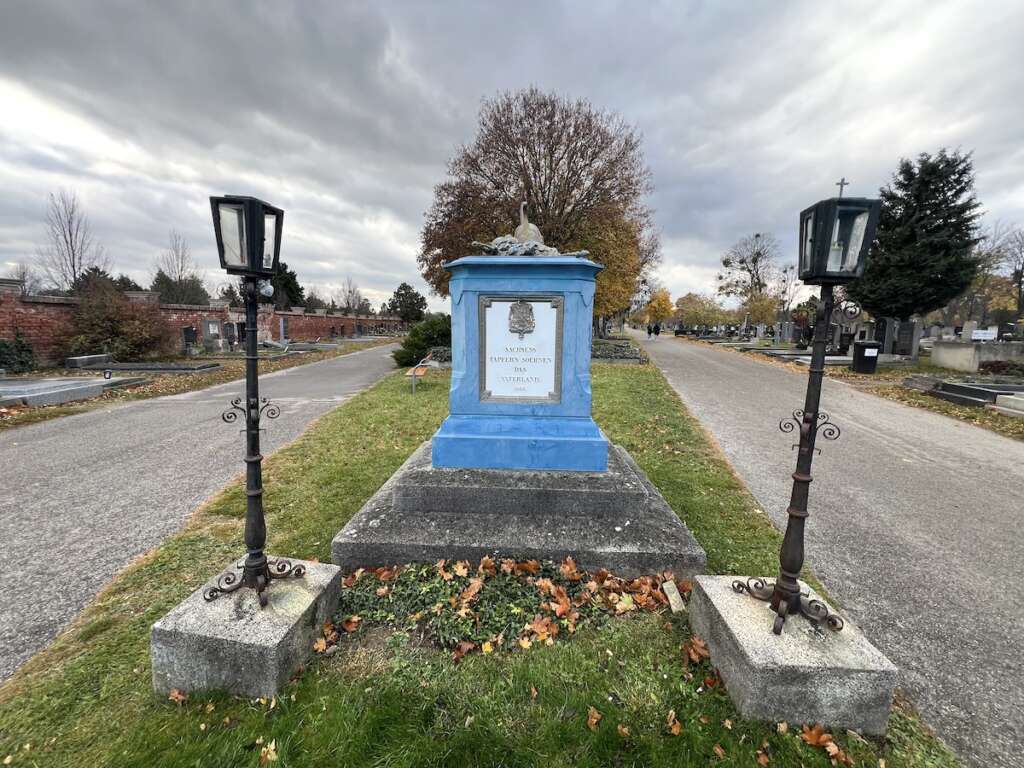
The necropolis was designed like a park – wide, tree-lined avenues, carefully maintained lawns, and numerous monuments give the place a monumental yet peaceful atmosphere.
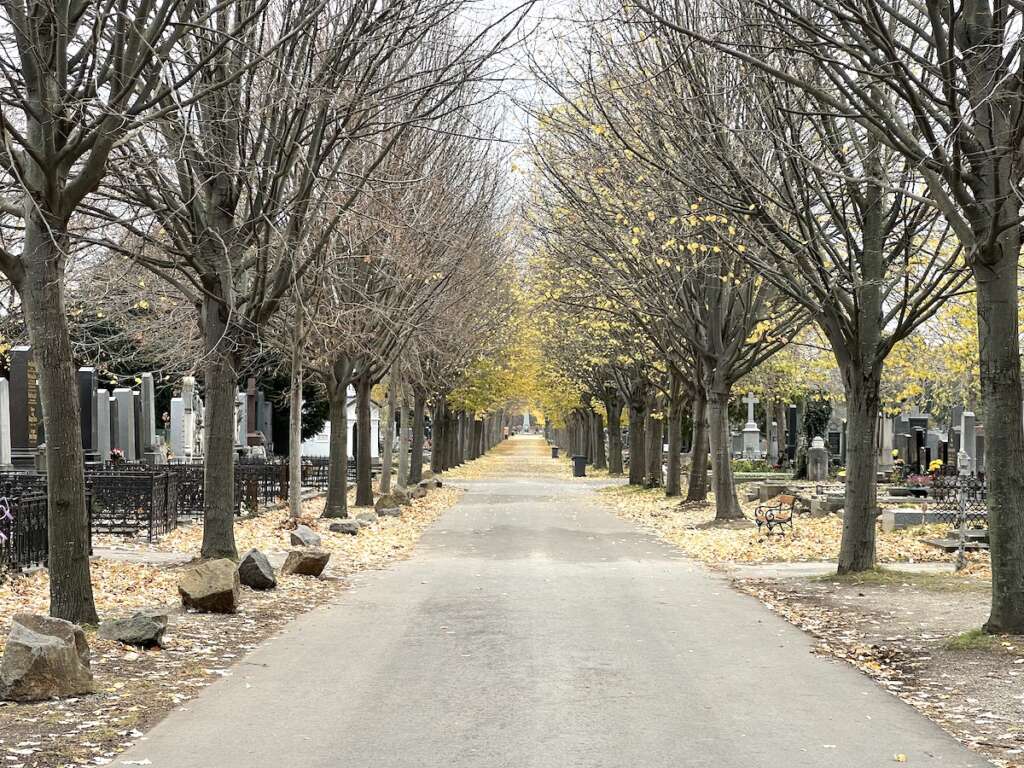
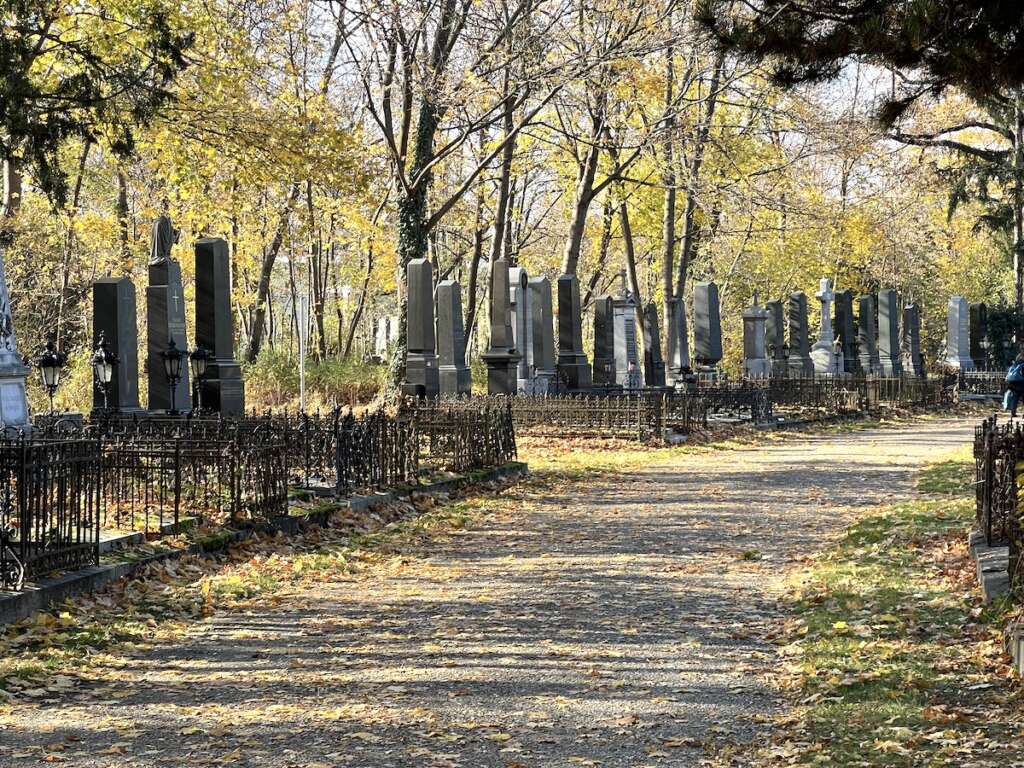
The most representative sections include:
Group 32A – the so-called Ehrengräber, or honorary graves of distinguished individuals;
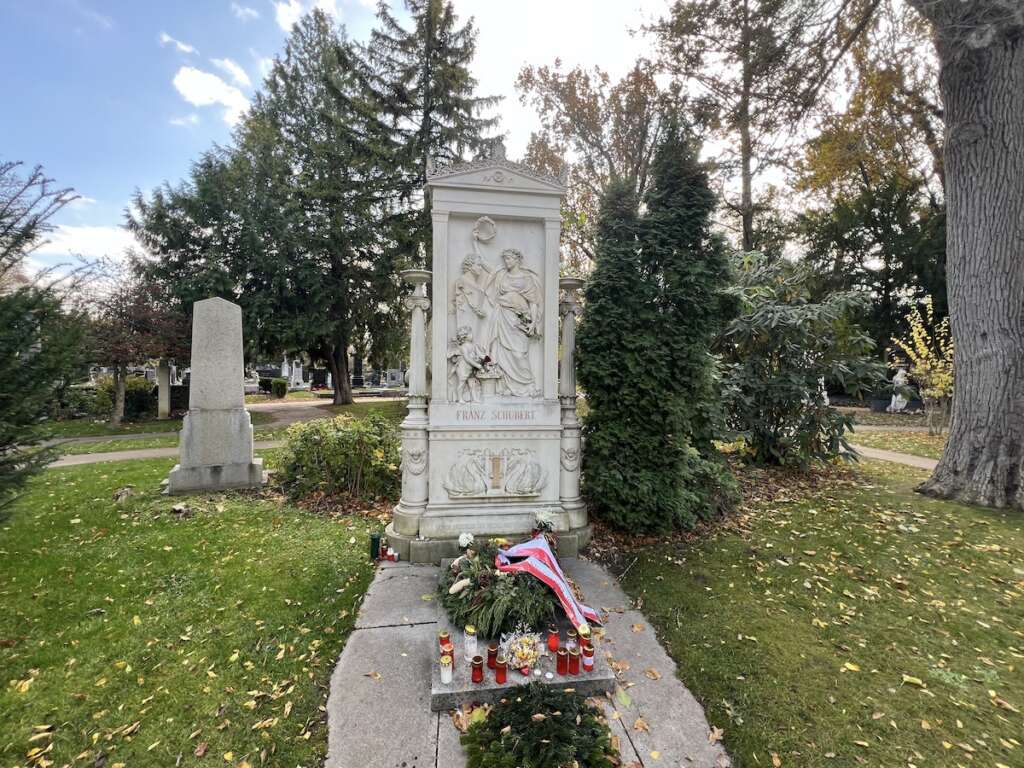
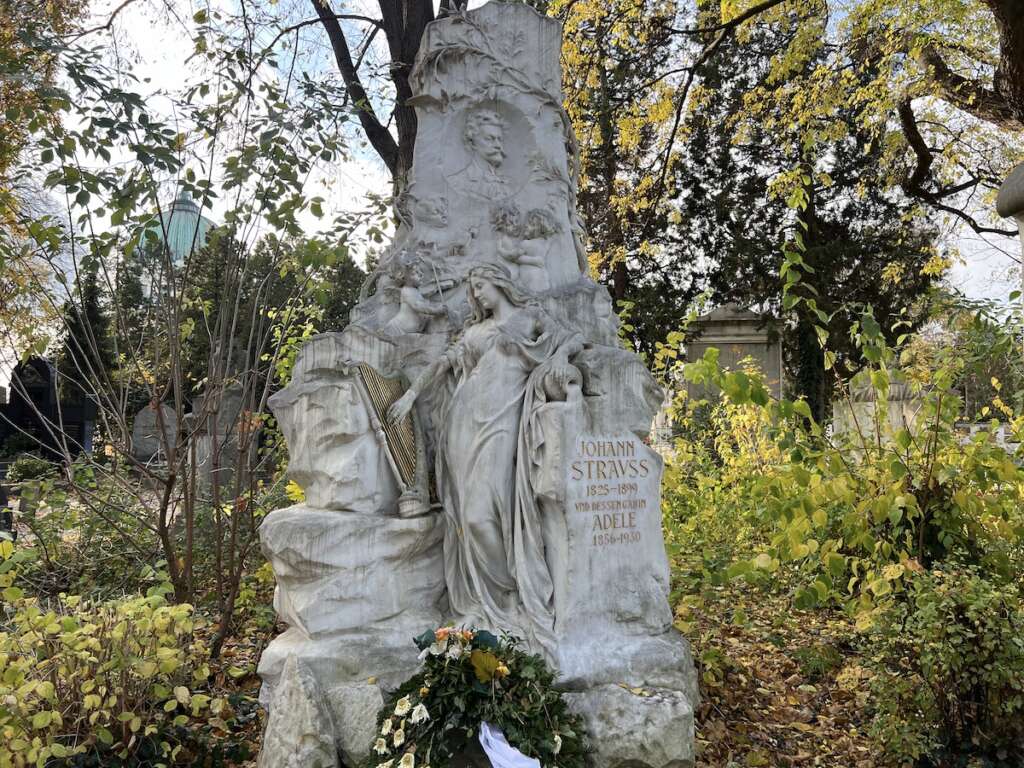
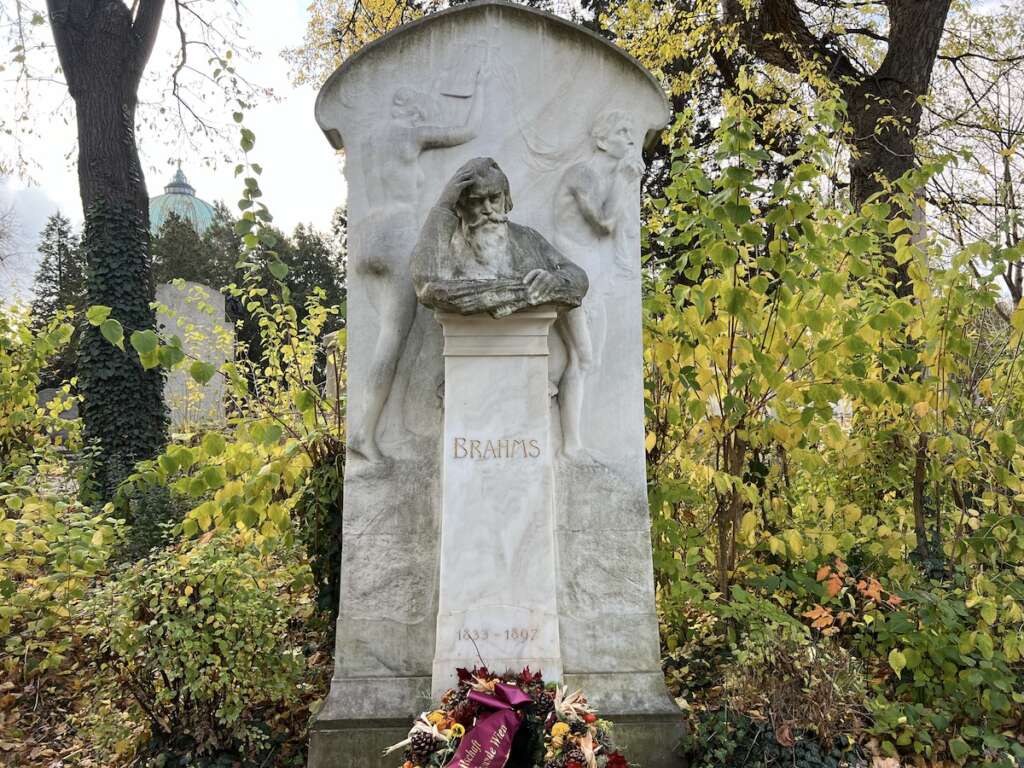
Ehrengräber der Musiker – the resting place of the greatest composers, such as Beethoven, Strauss, and Schubert;
The military section – with graves of soldiers who fell in both World Wars and victims of 20th-century conflicts;
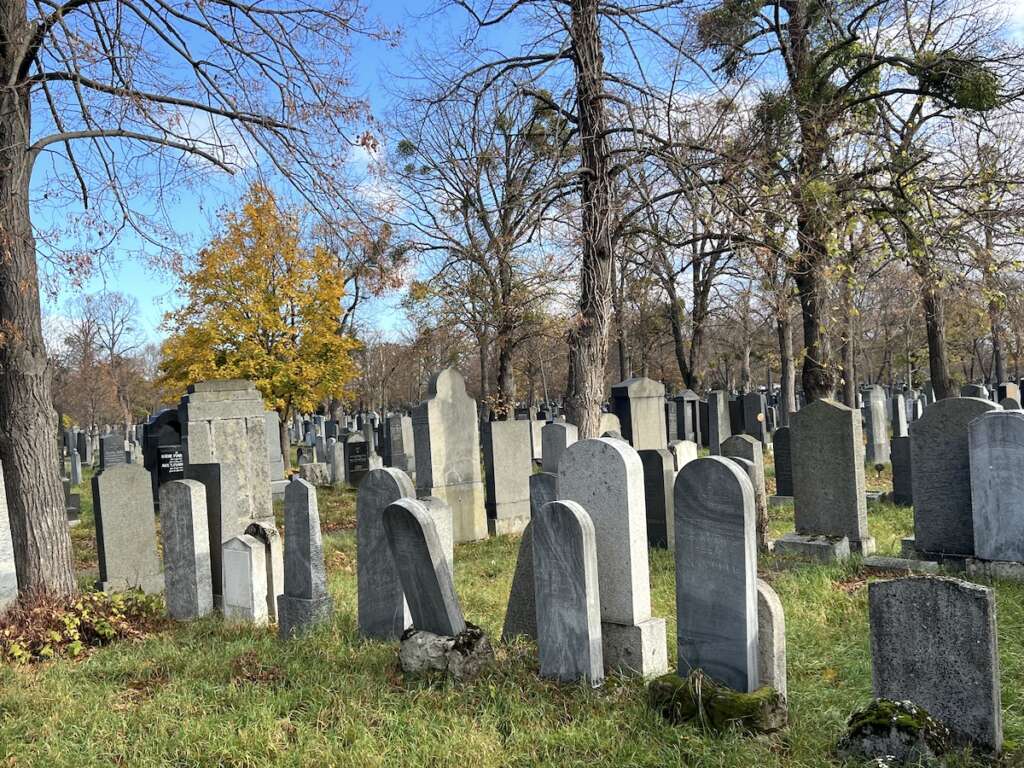
The Jewish Cemetery – one of the most valuable parts of the complex, with graves of rabbis, merchants, scholars, and figures who played an important role in Vienna’s history;
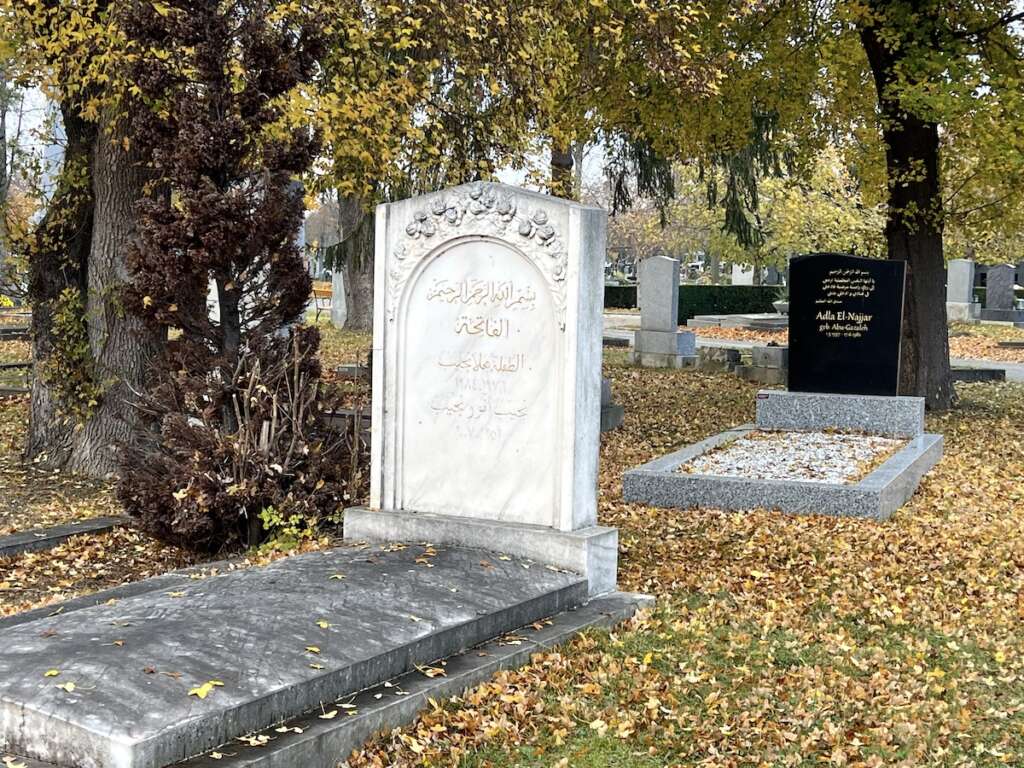
Muslim, Orthodox, and Protestant sections – reflecting the city’s cultural and religious diversity.
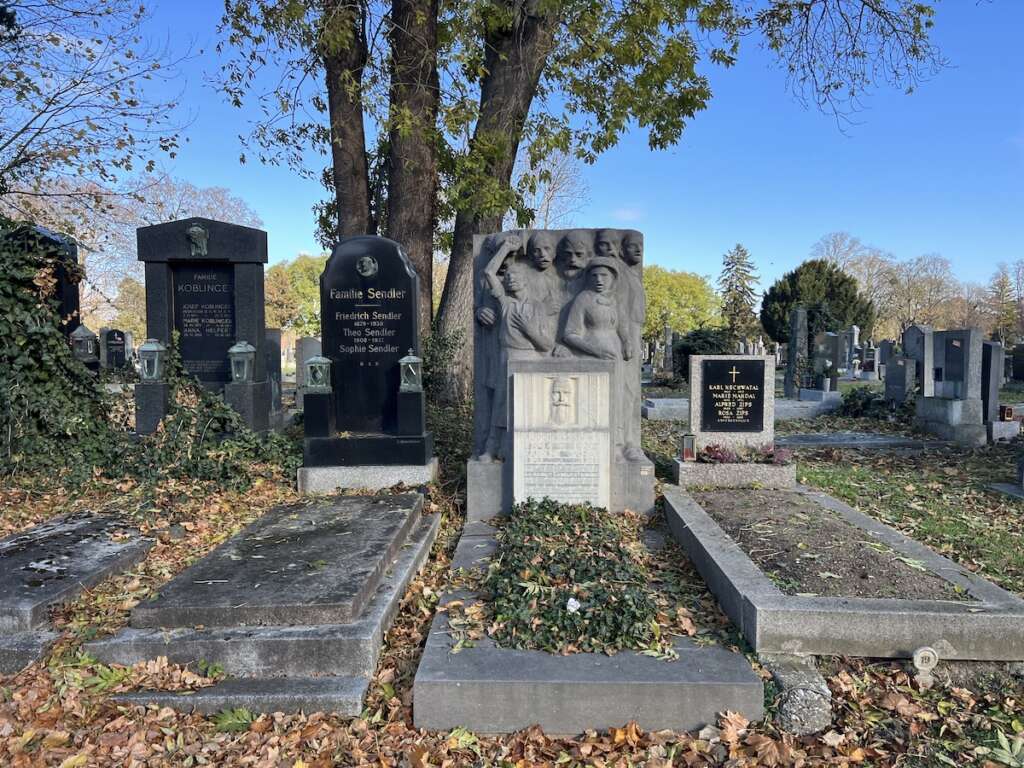
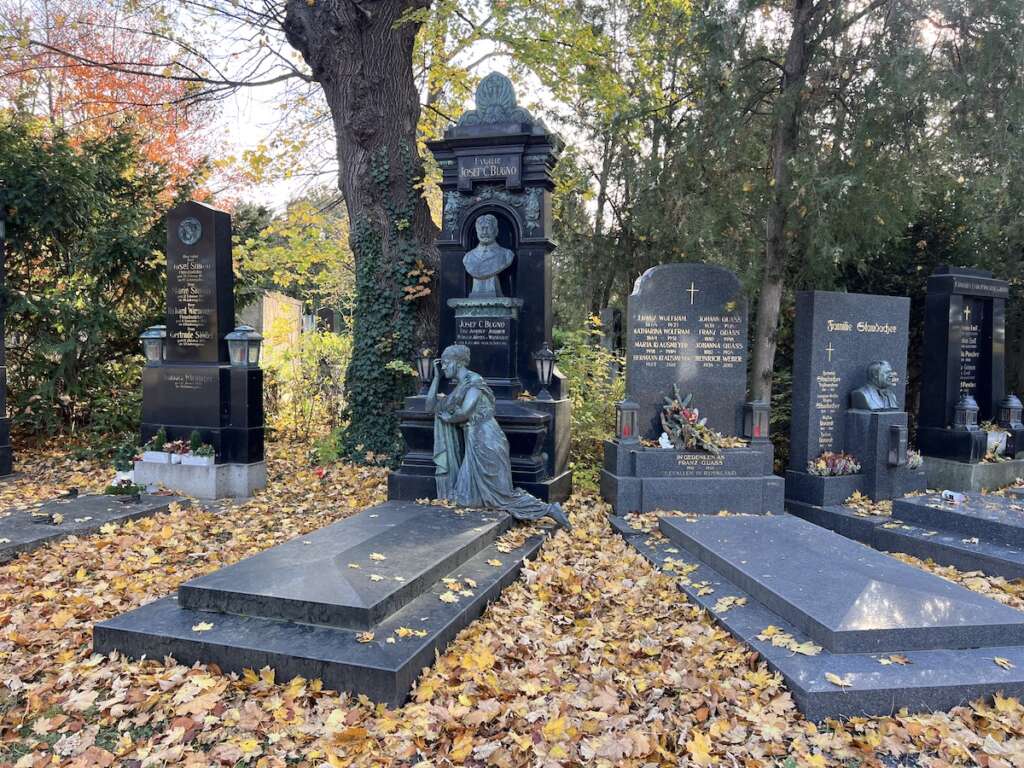
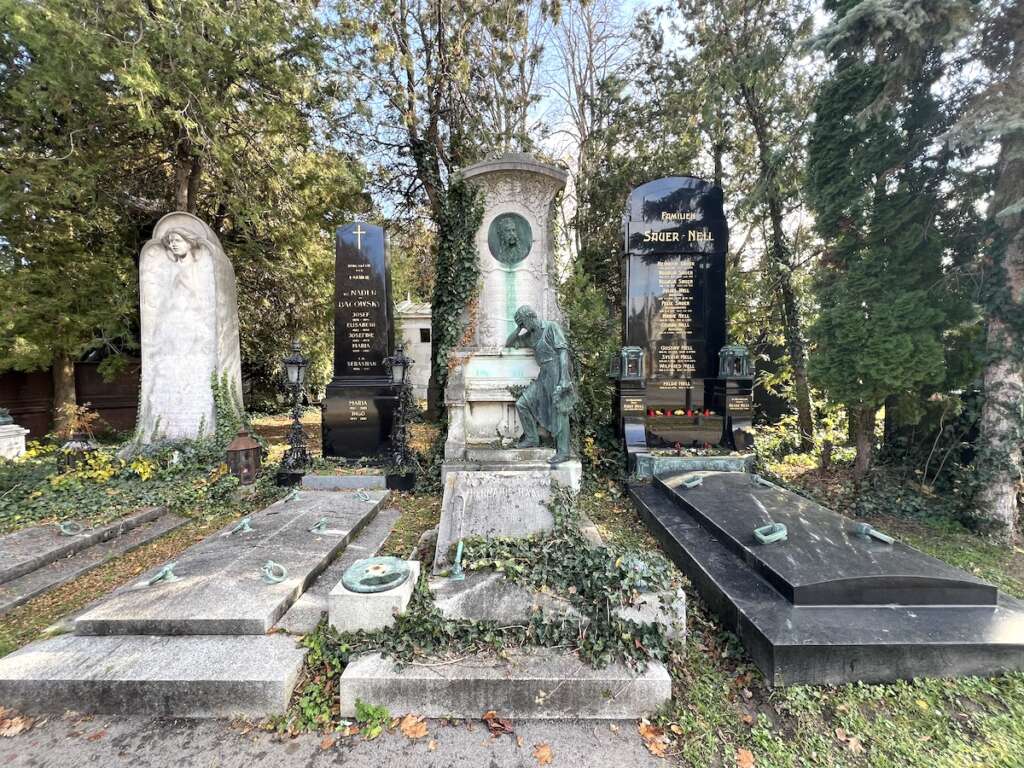
Each section has its own distinct character – from modest stone matzevot with Hebrew inscriptions to monumental mausoleums of wealthy Viennese families. The cemetery is vast, yet planned in a way that allows it to be explored thematically – musicians, scholars, artists, entrepreneurs, politicians, and ordinary residents together form a unique story of the city. If you don’t have a specific plan, it’s well worth simply taking a walk and discovering the place spontaneously.
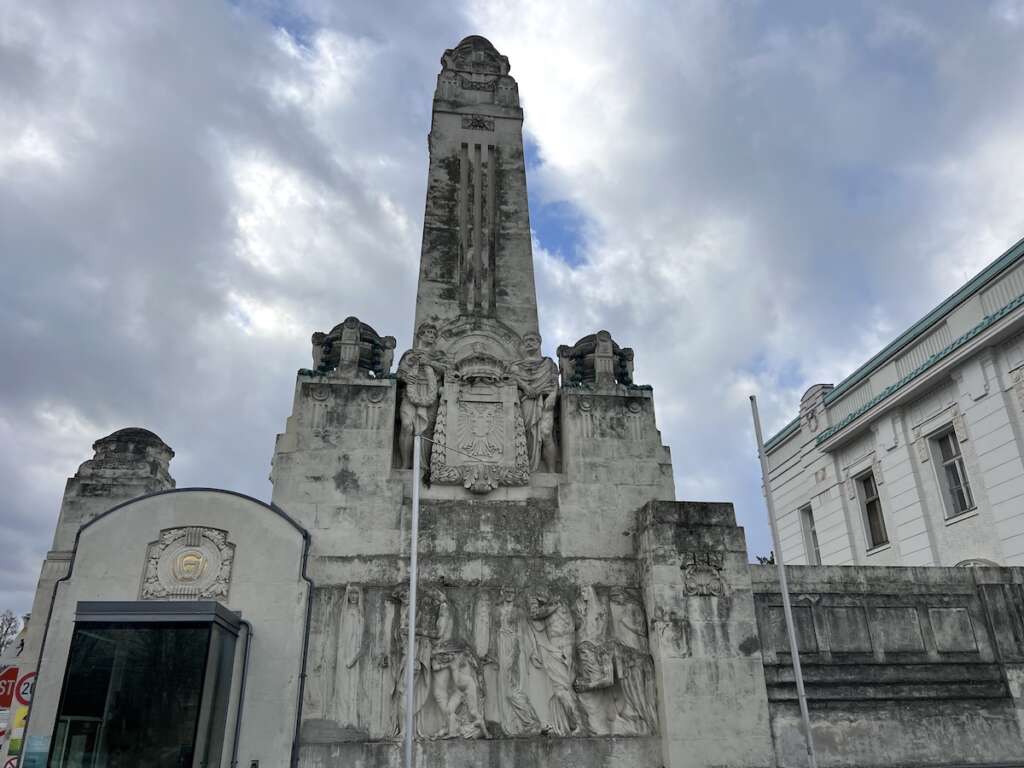
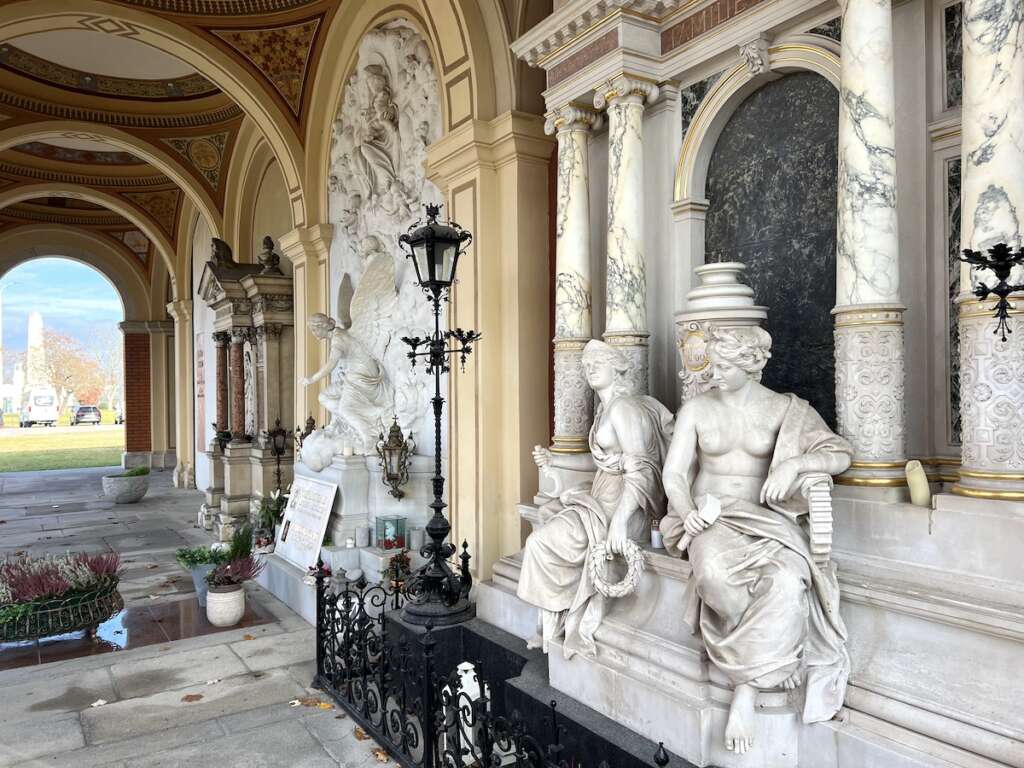
Even the Main Gate alone gives a sense of the scale of this site. It was built in 1905 and consists of two pylons: one dedicated to Emperor Franz Joseph I, and the other to the Mayor of Vienna, Karl Lueger. Just beyond the gate are the so-called Old Arcades, a collection of tombs of distinguished individuals. Vienna Central Cemetery also has a Cemetery Museum on its grounds, although unfortunately we didn’t have time to visit it on this occasion.
History of the Cemetery
Vienna Central Cemetery was opened in 1874, at a time when Vienna was experiencing rapid population growth. The decision to establish it, however, had been made 11 years earlier. The city urgently needed a new, large necropolis—the existing cemeteries were overcrowded and far too small to meet the needs of the growing population. City authorities therefore decided to create a vast, modern cemetery designed to serve many generations. Its location outside the historic city center ensured ample space for future expansion while still allowing convenient access.
The cemetery’s design followed the 19th-century concept of a “garden necropolis” – spacious, accessible, with wide avenues, abundant greenery, and monumental architecture. From the very beginning, separate sections were designated for different religious denominations, including Catholics, Protestants, Jews, Orthodox Christians, and Muslims. Over time, Vienna Central Cemetery became the final resting place not only of ordinary citizens but also of the most prominent figures in Austrian culture, science, and politics. The first burial at the Zentralfriedhof took place on 1 November 1874, and the grave of Jakob Zelzer, who was buried that day, still exists.
In the 20th century, Vienna Central Cemetery was expanded several times. New military sections were created, memorials to victims of Nazism were established, and a modern crematorium was built. Today, the necropolis is not only a place of burial but also a space of historical remembrance and one of Vienna’s most important cultural attractions, visited by both tourists and locals alike.
Vienna Central Cemetery is also a powerful testament to the city’s multicultural past. The gravestones bear thousands of surnames reflecting historic migration movements – you will certainly notice Polish, Czech, and Slovak names among them.

St. Charles Borromeo Church
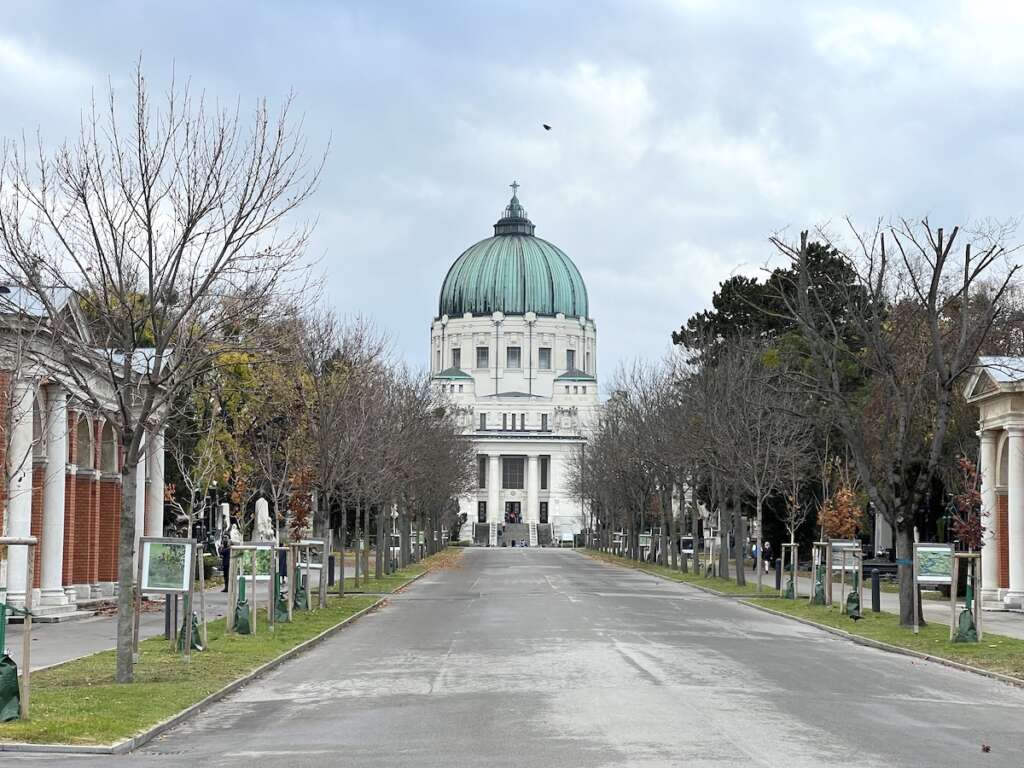
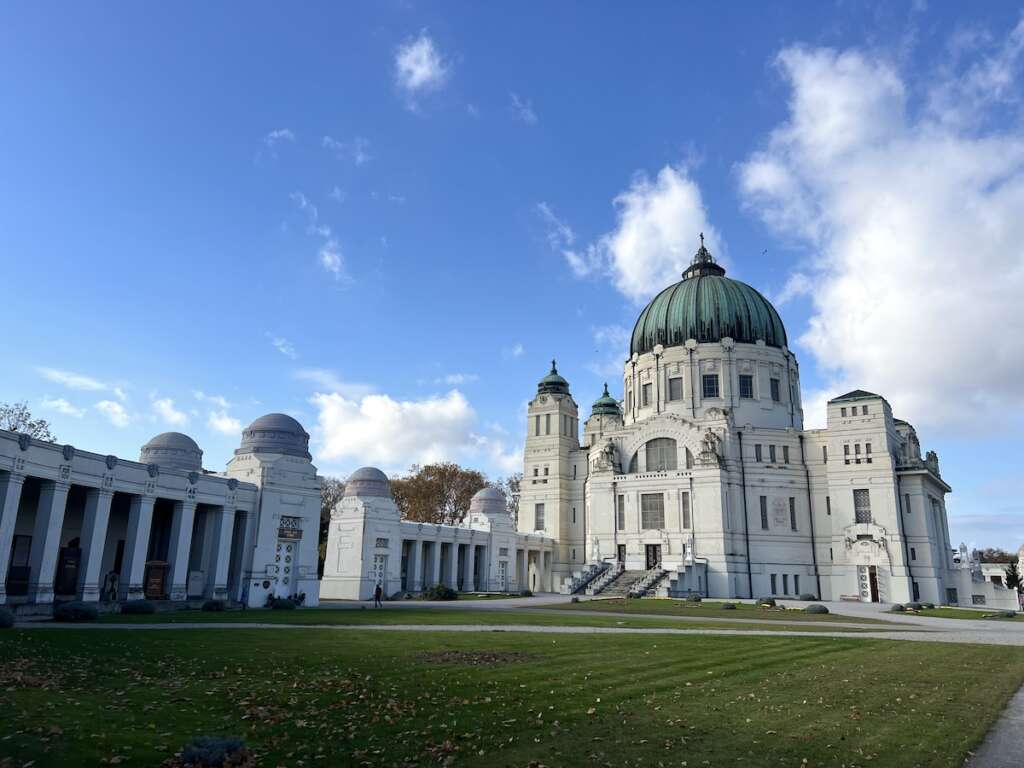
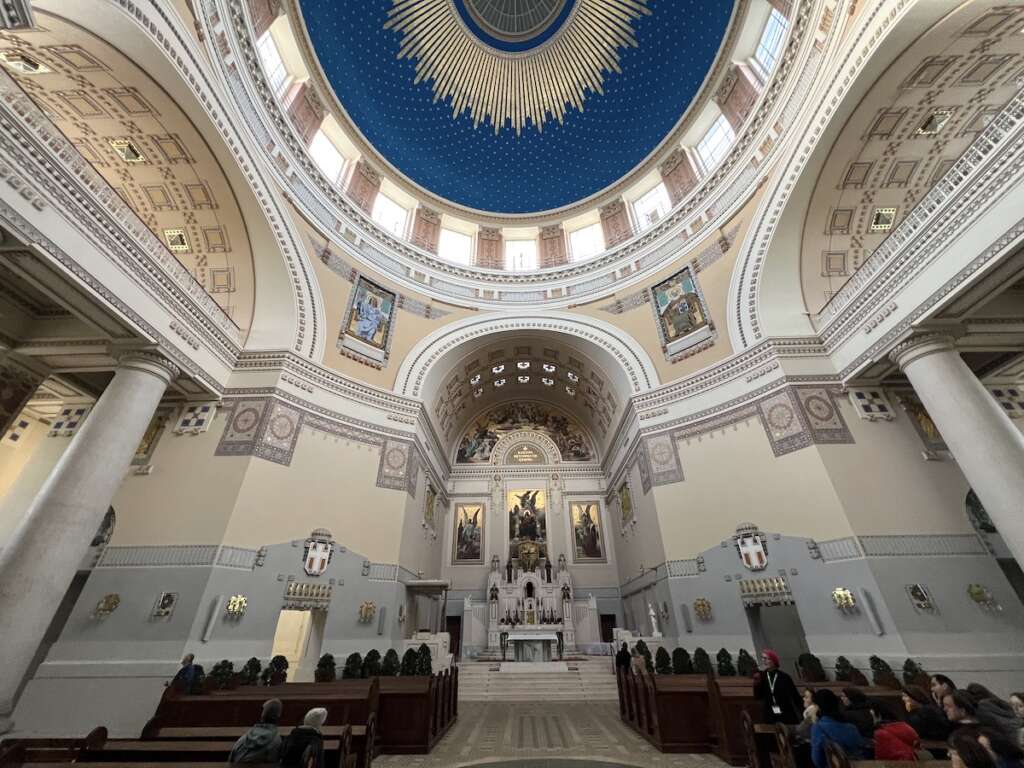
The dominant landmark of Vienna Central Cemetery is the majestic St. Charles Borromeo Cemetery Church, formerly also known as the Dr. Karl Lueger Memorial Church (Dr.-Karl-Lueger-Gedächtniskirche). This Art Nouveau (Secession) temple was designed by the renowned architect Max Hegele and completed in 1910. Its massive dome, decorated inside with turquoise tiles, is visible from a great distance and is considered one of the finest examples of Viennese Secession in sacred architecture.
The interior of the church impresses with its harmonious blend of classical forms and Art Nouveau details—delicate ornaments, gilded elements, and monumental columns. The focal point is the altar featuring an image of St. Charles Borromeo. Beneath the church are crypts, including the burial place of Karl Lueger, the mayor of Vienna whose activities had a significant impact on the city’s development at the turn of the 19th and 20th centuries.
The church serves not only as a venue for funeral ceremonies but is also frequently visited for its architectural value. In summer, organ concerts are held here as well, attracting admirers of Art Nouveau and classical music.
Graves of the Honoured
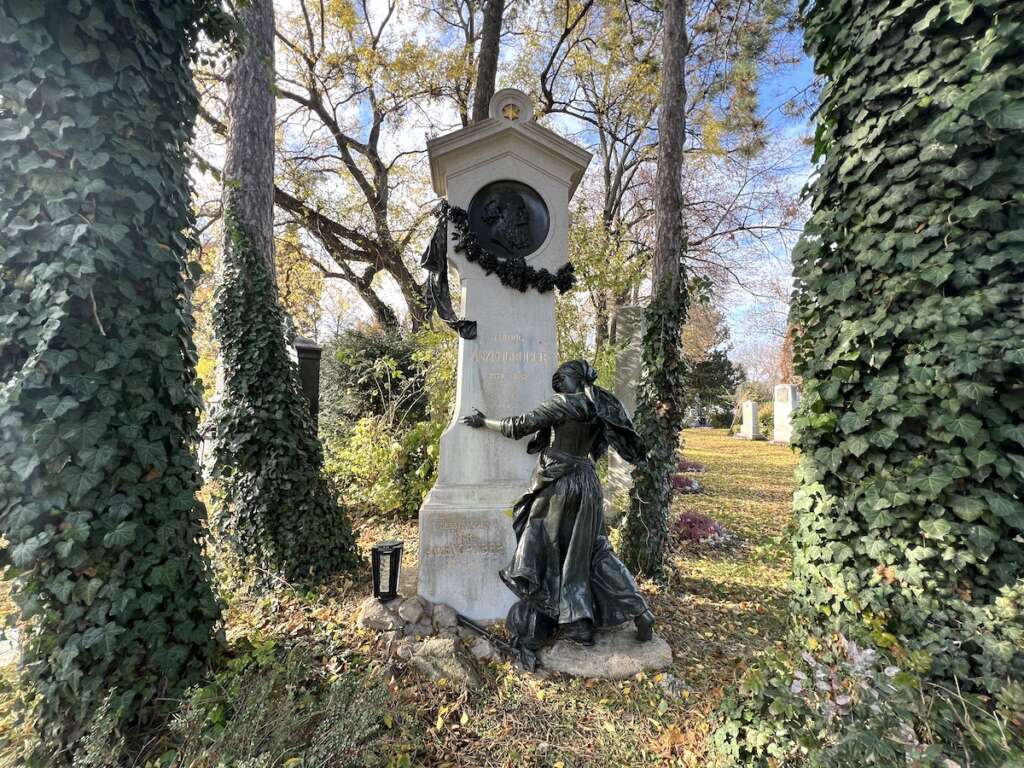
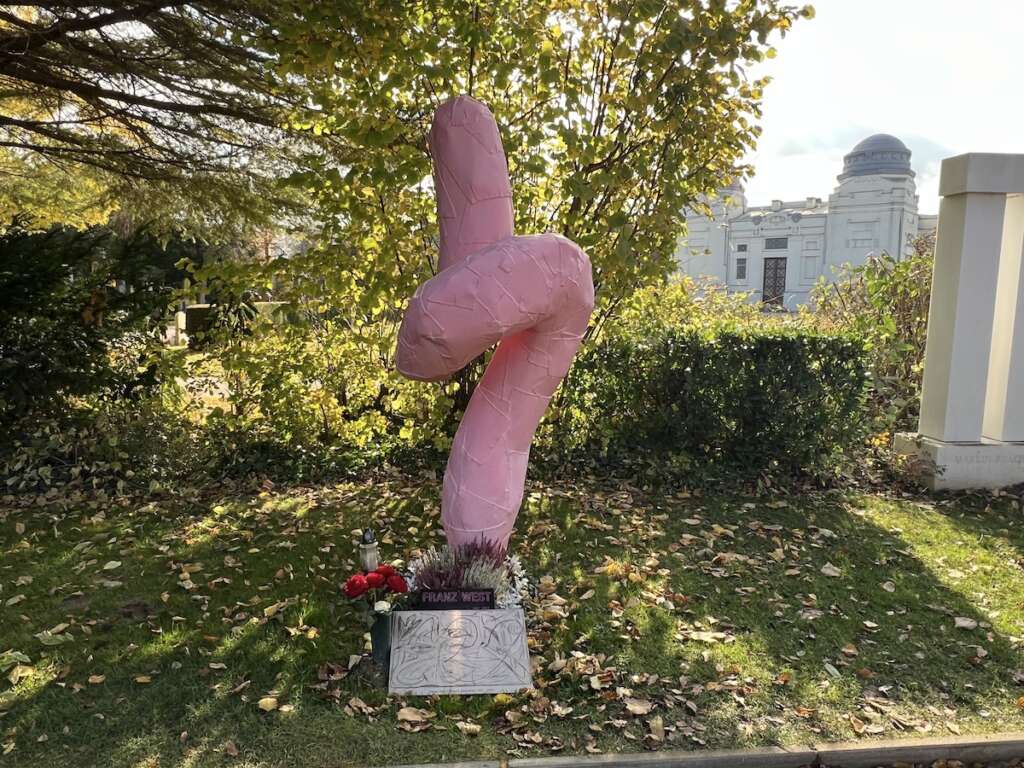
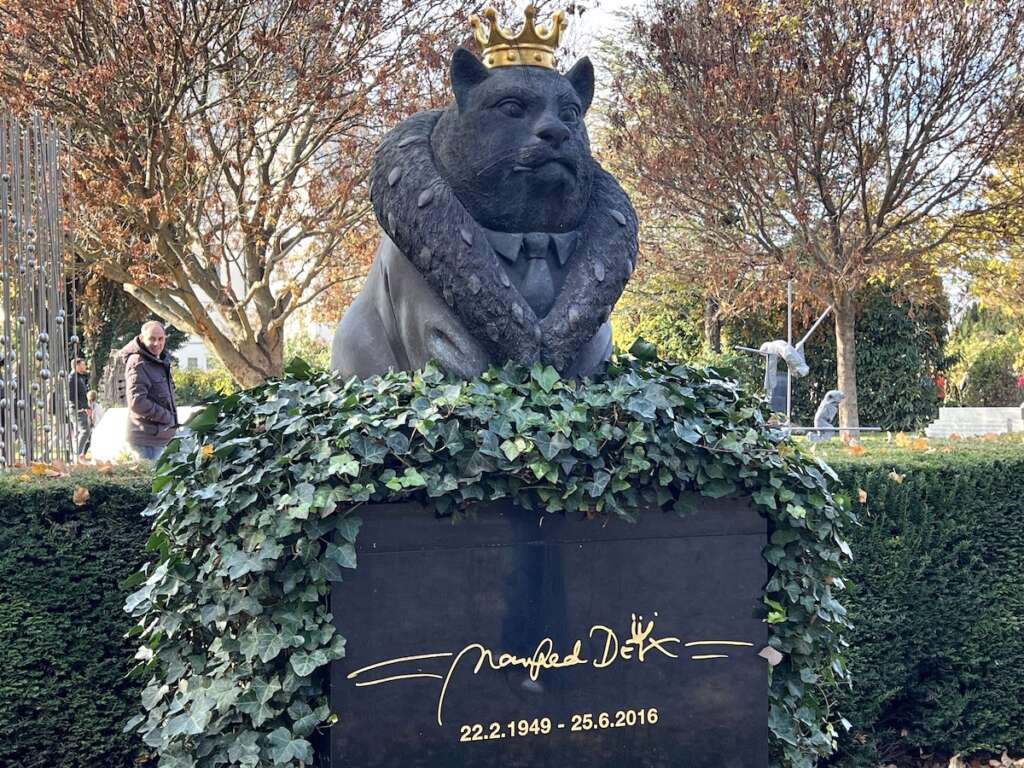
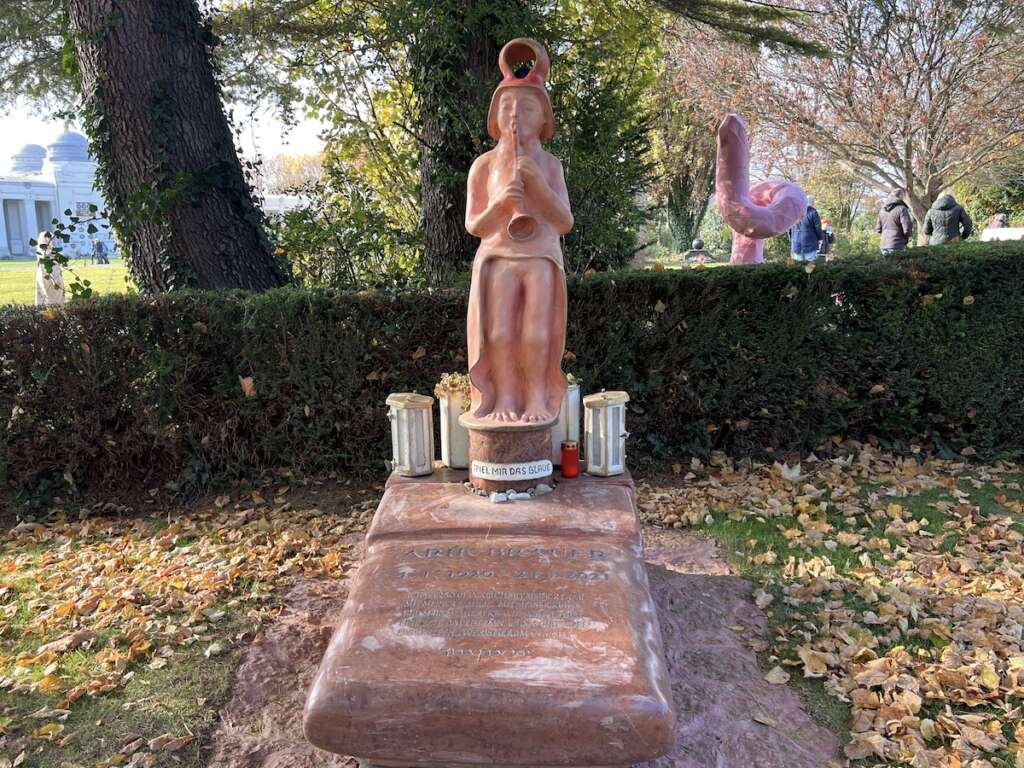
Vienna Central Cemetery is renowned for its remarkable number of Ehrengräber—honorary graves where the most distinguished figures connected with Austria are laid to rest. There are over 1,000 such graves, many belonging to individuals whose names are known around the world.
Composers
Ludwig van Beethoven – reinterred here from the Währing Cemetery; his monumental grave is one of the most frequently visited sites in the necropolis.
Johann Strauss (father and son) – the kings of the waltz, whose music remains inseparably associated with Vienna.
Franz Schubert – a master of vocal lyricism.
Johannes Brahms, Wolfgang Amadeus Mozart (symbolic grave).

Artists, Writers, Scientists
Falco – one of Austria’s biggest pop music icons.
Arnold Schönberg – the creator of twelve-tone (dodecaphonic) music.
Carl Ritter von Ghega – designer of the Semmering Railway.
Christian Doppler – physicist, author of the famous Doppler effect.
Politicians and Public Figures
Numerous mayors of Vienna, ministers, social activists, and philanthropists are also buried here.
When visiting the honorary graves, it’s worth using a map – Section 32A and its surroundings form the heart of this part of the cemetery. The monumental tombs are works of renowned sculptors and together create a unique open-air gallery of funerary art.
Is the Vienna Central Cemetery worth visiting?
The Vienna Central Cemetery offers a completely different perspective on Austria’s capital – one filled with reflection, beauty, and centuries of history. It’s a place that captivates lovers of art and architecture as well as those who appreciate quiet, atmospheric spaces. If you want to get to know Vienna on a deeper level, this extraordinary site definitely deserves a place on your list.
The Vienna Central Cemetery is not a typical tourist attraction, although tourists are certainly present. In my opinion, it’s a place well worth discovering, and if you’re interested in the history of Vienna, you’ll definitely find plenty to explore here.
PS If you’re planning a longer stay in Vienna, be sure to check out our article Vienna for a Weekend. You’ll find our idea for a perfect city break in the Austrian capital there.